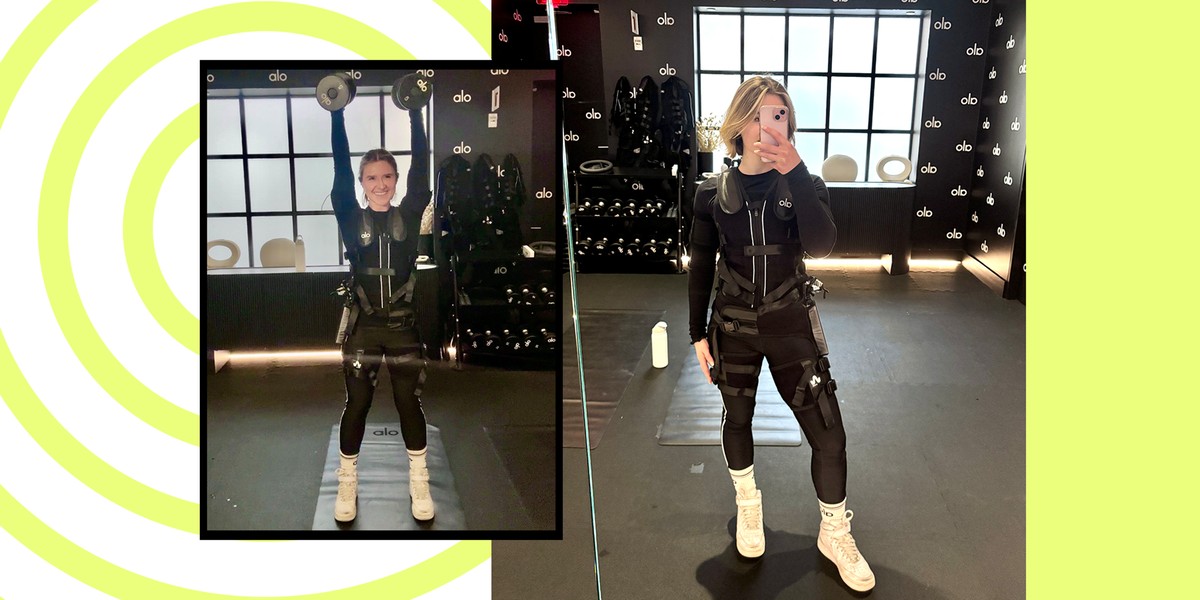
Electrical Muscle Stimulation. It sounds like science fiction. It feels like a science experiment gone wrong. You strap into a suit. It zaps you. Your muscles twitch on command.
EMS is having a moment. Again. It’s not new tech. Researchers have been poking muscles with electricity since the 1960s. But now it’s back in the zeitgeist alongside bungee fitness and trampolining.
“EMS tech is nothing new.”
So, what is an EMS workout exactly? And more importantly, is it worth the intimidation factor?
I tried one at an Alo studio in New York City. Here is the honest, unfiltered truth.
How Electrical Muscle Stimulation Works in Practice
You walk in. You put on a suit covered in electrodes. The trainer sprays water on the pads. Water conducts electricity. Dry skin does not. This step is non-negotiable for safety and efficacy.
Then the battery pack clicks into place. You feel like a cyborg. Or maybe Scarlett Johansson in Black Widow, but less sleek and more sweaty.
The trainer stands across the room with an iPad. She controls the intensity. She decides which muscle groups get the juice. Want less core burn? She can dial it back. Want legs that feel like jelly? She can crank it up.
The sensation is immediate. Vibrations. Twitching. It’s not painful, but it’s intense. It feels like your body is having a conversation with the machine and losing the argument.
“It felt like I was being zapped or getting weird massage.”
The suit triggers muscle contractions independently of your brain signals. Usually, you think move, and your brain sends the signal. Here, the suit says contract, and the muscle obeys. Alex Rothstein, an exercise physiologist at the New York Institute of Technology, explains that this artificial contraction can teach your brain to allow muscles to contract harder.
But it’s disorienting. My breathing got shallow during the warmup because my core was vibrating so hard. I had to consciously force myself to breathe. It’s harder than it looks.
What to Expect During a 20-Minute EMS Session
The standard EMS session lasts about 20 minutes. That’s the big selling point. Twenty minutes equals two hours of traditional training, the marketing claims.
I started with a warmup. Squat to overhead press. Lunge to bicep curl. Standard stuff. But with the suit on? It was brutal.
Here is why the warmup was the hardest part: I wasn’t used to the feeling. My legs were already tired from a previous workout. The EMS amplified the fatigue.
The main workout focused on arms and endurance. The exercises included:
- Double-arm front raise with a plate
- Squat and twist to front press
- Isometric squat with wood chop
- Cable lat pushdown to tricep extension
- Single-leg mountain climber
- Plank with single-leg crunch
The weights were light. Very light. For a regular gym-goer, these are warmup weights. But with the EMS suit adding involuntary contractions, the resistance felt like I was lifting 15 pounds more than the plates actually weighed.
I asked the trainer to lower the intensity after two exercises. My core was too fatigued to stay stable. Planks became wobbly messes. The suit doesn’t care if you’re tired. It just zaps.
At the end, I laid down for a five-minute cooldown. The vibrations were minimal then. It felt therapeutic. Like deep tissue massage without the human touch.
Is EMS Effective for Building Strength and Losing Fat?
Here is the million-dollar question. Does it work?
Short answer: Yes. Long answer: It’s complicated.
Research from the last five years shows potential benefits. A 2023 study in PeerJ followed 28 adults for eight weeks. One group did daily EMS with resistance training. The other did just resistance training.
The EMS group had:
- Higher muscle mass
- Increased strength
- Lower body fat
It seems the added stimulation creates deeper contractions than voluntary movement alone. Rothstein notes that this can lead to adaptation. You grow some muscle. You get stronger.
But is it better than just lifting weights normally?
Another study in Physical Activity and Nutrition looked at 14 patients with obesity and kneepain. They did lower-body strength exercises with and without EMS. Both groups improved similarly in body composition and blood lipids. The only difference? The EMS group had less knee pain and slightly better extension strength.
A third study in Medicine (2023) focused on core strength. Thirty-nine healthy adults trained for eight weeks. The EMS group and the non-EMS group had similar physical performance metrics.
“EMS is not a magical end-all, be-all.”
So, why the hype? It’s convenient. It’s novel. It forces you to work harder without adding heavy load on your joints.
But it’s not a replacement. Rothstein advises using EMS in addition to your routine, not instead of it. Overuse diminishes returns. The novelty wears off. The body adapts.
Safety Risks and Who Should Avoid EMS Workouts
This isn’t for everyone. In fact, it’s dangerous for many people.
The electrical current interacts with your nervous system. If you have a pacemaker, a copper IUD, or implanted medical devices, do not do this. The electricity can interfere with those devices.
Other contraindications include:
- Pregnancy
- High blood pressure
- Heart conditions
- Kidney issues
Even if you’re healthy, the experience can be scary. When my elbows locked out during the session, I couldn’t move them for a split second. It felt like my limbs had betrayed me.
I felt hesitant the whole time. Not just because of the sensation, but because I didn’t know what the long-term effects were. Is it safe to do twice a week? Every day? The research is still catching up to the marketing.
The Verdict: Should You Try an EMS Workout?
If you love novelty, yes. Give it a try.
I felt like a lab rat. I was out of breath. My muscles burned. But I also felt like I had actually done something in 20 minutes.
It’s a fun intervention. A good shake-up for a stale routine. It forces you to engage muscles you might ignore during standard squats.
But don’t expect miracles. It’s not a shortcut to fitness. It’s a tool. Like any tool, it’s only as good as how you use it.
I’d try it again. Next time, I won’t be so afraid of the zaps. I’ll push harder. I’ll see if I can handle the full intensity.
Have you tried electrical stimulation? Or does the idea of being zapped make you run for the hills? Either way, do your research. Talk to your doctor. And maybe wear comfortable clothes. You will sweat.