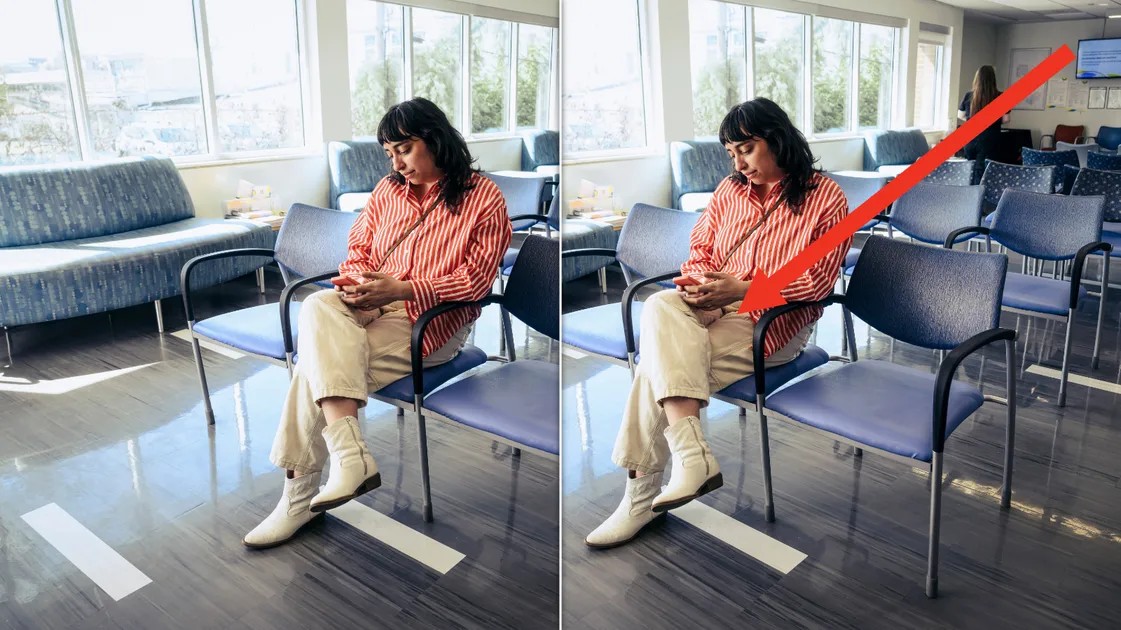
Cross your legs.
Go ahead. You probably do it right now. At a desk? On a couch? It’s that casual drape of one ankle over the opposite knee that feels effortless, almost automatic. It looks professional enough for a meeting, relaxed enough for the stadium bleachers. We spend half our lives there.
Physical therapists say there isn’t a sin in this particular posture. Just physics. And maybe a warning.
The support illusion
Valerie Rogers, a PT at Mount Sinai Health System, sees why we like it. The cross provides structure.
“Gives you a little bit of support… so you don’t have to use as many muscles to stay upright.”
Less work is the draw. Leaning forward? Easy. Standing straight with feet flat? Harder. But ease has a cost. A static posture makes your stabilizing muscles lazy. Eventually, they forget their job.
You can sit like this while engaging your core. It works both ways, Rogers says. Most of us don’t bother with the engagement part. We just sit.
Pelvic tilting
Do it too often? Your body compensates. Ethan Triplett at Orlando Health points out the tilt. Cross one leg and your pelvis shifts. Up on one side, down on the other. The spine follows, curving into a slouch that climbs straight into your neck.
Your glutes take uneven pressure. One side works overtime. The other sits idle. Result? Muscle discomfort. A dull ache that whispers, “move already.”
The blood pressure blip
Here’s a scary sounding one: crossing legs raises blood pressure.
True. Temporarily.
Alex Hill, an oncology PT in Florida, explains that doctors ask you to keep feet flat on measurements because of this spike. But Hill insists we stop worrying about long-term damage. You aren’t developing chronic hypertension because you like comfort. The rise is momentary.
“It’s not that having your legs crossed… is going to cause hypertension.”
One caveat though. If you have lymphedema? Stay flat on the floor. Crossing legs can occlude vessels and tank fluid drainage efficiency. For everyone else, it’s mostly just a number on a screen for five seconds.
The real enemy isn’t posture
It’s staying put.
“Your best posture is your next posture.” Triplett repeats this like a mantra. Ryan Galvin at UofL Health adds a timer. Every thirty minutes. Get up.
Why? Because stillness is molding clay. Your body adapts to what you feed it. Stare at a screen for four hours and your neck moves forward. You build “tech neck” through repetition, not anatomy.
Hill notes the danger zone. Weak muscles. Tight hip flexors. Short hamstrings. It’s the stagnation that hurts. Sitting one day with crossed legs won’t kill you.
But sitting all day? Even with legs crossed?
That’s where things go sideways.
We know this. We still don’t stand up. The next episode is loading, after all. And sitting is easier. Much easier.
Who checks the clock? 🕰️