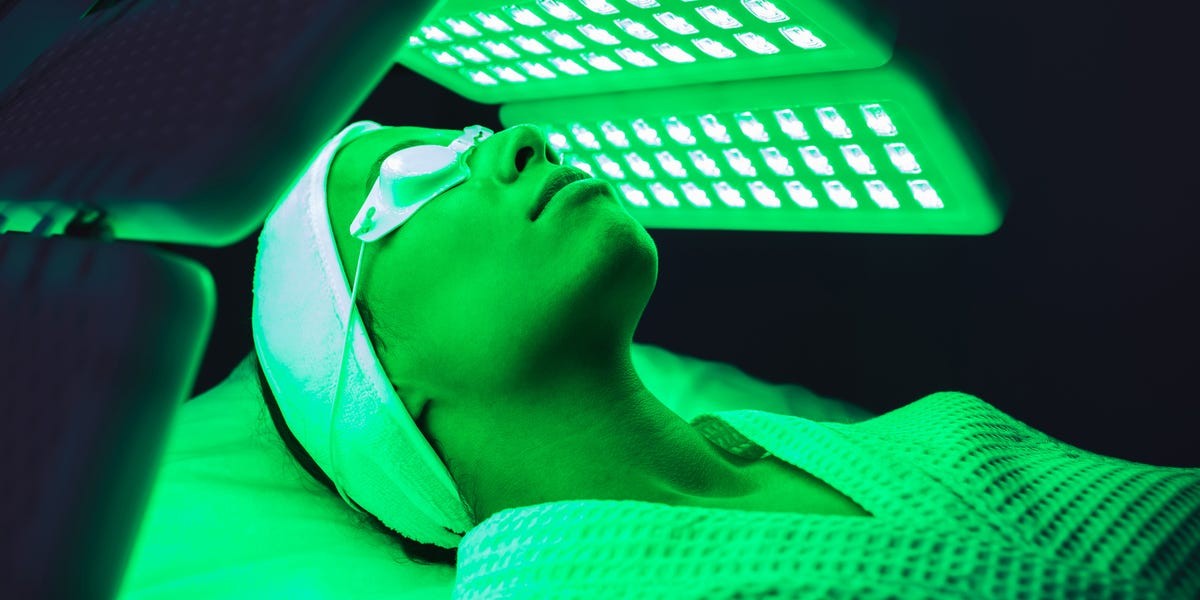
Light therapy isn’t just about looking cool in the mirror. It’s not just a prop for Instagram selfies. There’s actual science behind those glowing devices. Spas offer them. Dermatologists prescribe them. Your local Sephora shelves them.
Red light fixes wrinkles and boosts hair growth. Blue light kills acne bacteria. Yellow light calms the burn of inflammation. But green light? That’s the new kid on the block. 🟢
Social media claims it fades dark spots. It supposedly reduces puffiness. And honestly. Bathing in that neon green glow is kind of hypnotic. But before you empty your wallet, let’s talk facts. We sat down with the heavy hitters: Dr. Kiran Mian, Dr. Hadley King, and Dr. Ellen Marmur.
Here’s what they think.
The Science (Or Lack Thereof)
Let’s get this out of the way. The research is thin. Paper thin.
Compare it to the decade-plus of studies backing red and blue light, and green looks lonely. But the theory makes sense. Here’s why.
Green light uses wavelengths between 500-570 nm. Short wavelengths. That means they don’t dig deep into the fat and muscle layers. They stick to the surface. The epidermis. The outer shield.
This is actually a feature, not a bug. Why? Because the cells that make pigment—the melanocytes —live right there on the surface. When they get overexcited by the sun or hormones, you get hyperpigmentation. Green light interacts with them. It quiets the chaos.
Same goes for redness. Capillaries in the upper dermis cause that angry flush. Green light helps soothe that too.
“That is why it works well to decrease visible pigment and helps with superficial redness.”
— Dr. Kiran Mian
So it targets tone. It targets redness. And Dr. Hadley King adds that it might even help wounds heal faster. Better blood circulation. A brighter, “glowy” finish.
But wait. Don’t go ordering five devices yet.
There’s a catch. A big one. The studies that do exist are scarce. Many are funded by the very companies selling you the gadget. And some early data suggests green light might increase melanin in certain conditions. We don’t know for sure. We just don’t have enough hard data.
Who should avoid it?
People sensitive to extreme light. Those with eye issues like macular degeneration or retinopathy. And pregnant people. No safety profile. No data. Too risky. Dr. Marmur advises skipping it completely.
Buying into the Trend
You won’t find this treatment much in a clinic alone. It’s an at-home game. The trend is booming. You just hit “Add to Cart” and wait for the package.
But pick wisely. The market is a wild west of LEDs.
“Buy from a brand that’s transparent,” Dr. Mian says. She’s strict on this. No vague promises. You want energy specifications. You want specs. These devices aren’t standardized. If the label is empty, walk away.
Look for FDA clearance. Any serious brand will scream this from the roof. Look for clinical trials on their site.
A few picks made our internal cut. But here’s the kicker:
Do you still need skincare?
Yes. Absolutely. Dr. King insists you keep using your routine. If dark spots are the enemy, green light is a supporting actor. The stars? Topicals.
Hydroquinone. Prescription strength. The heavy hitter. Or go OTC with these friends:
- Vitamin C. Stops free radical damage.
- Niacinamide. Blocks pigment transfer.
- Retinoids. Speed up cell turnover.
- Tranexamic acid. Hits hyperpigmentation from all sides.
Green light won’t replace them. It might boost them. But it’s not a magic eraser.
One last thing. Safety goggles. Always wear them. Protect your eyes. And consistency. It’s the hardest part.
“Results are slow. But progressive,” Dr. Mian notes.
You won’t wake up perfect after one night. It’s a marathon. Use the device. Keep up with your creams. See what happens. Maybe nothing. Maybe a change. We’ll know when the data catches up to the hype. Until then? It’s an experiment. One you conduct on your own face.