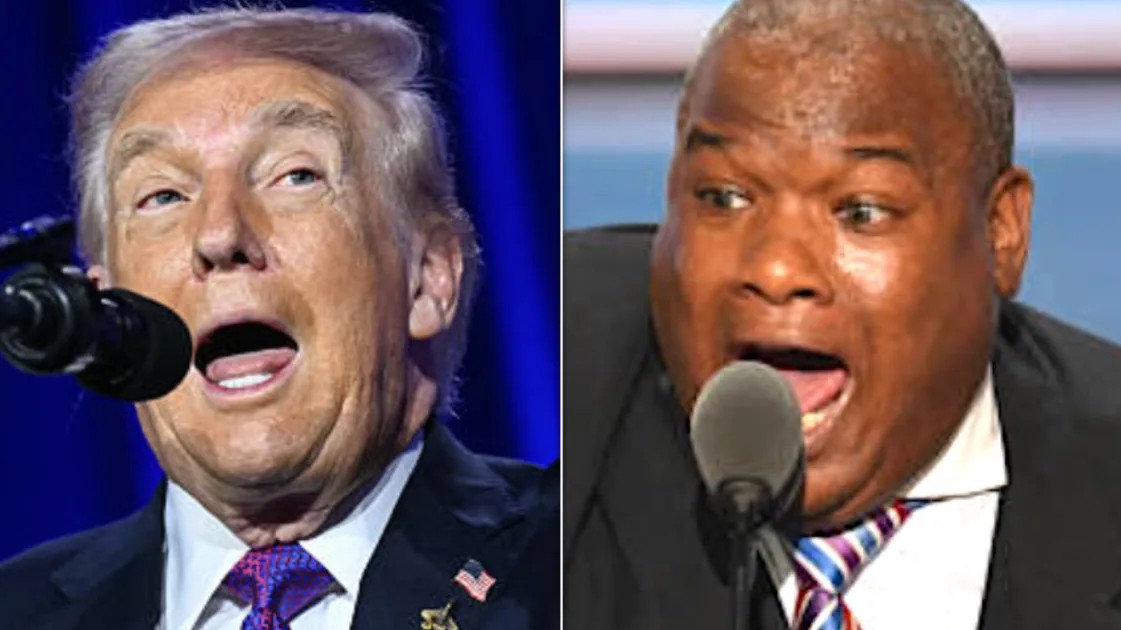
Mark Burns, a South Carolina-based pastor who serves as a spiritual adviser to Donald Trump, offered a startling theological defense of the former president’s history of sexual misconduct in a recent interview with The New Yorker. Rather than denying the allegations or minimizing their severity, Burns argued that divine forgiveness renders Trump’s past actions irrelevant to his current political legitimacy.
The interview, conducted with New Yorker staff writer Isaac Chotiner, highlighted a stark contrast between secular legal judgments and Burns’s religious framework. While Trump has been found liable for sexually abusing writer E. Jean Carroll and faces accusations from dozens of other women, Burns contends that these issues are matters for God, not the electorate or the courts.
A Theology of Indifference
The core of Burns’s argument rests on the idea that all human beings are flawed, but that divine judgment supersedes human morality. When Chotiner noted that Burns seemed to accept the premise that Trump committed these acts but believed “God works in mysterious ways,” Burns expanded the scope to include everyone, including the interviewer.
“I think that it could be said about all of us,” Burns replied. “There are things that you’ve done that you pray to God never become a New Yorker story.”
Chotiner pushed back, distinguishing between private flaws and public, predatory behavior. He pointed out that he had not grabbed women against their will, bragged about doing so, or engaged in racist rhetoric. Burns responded by invoking a “sliding scale” of sin, drawing a controversial parallel between moral failings and civil infractions.
Equating Gluttony With Murder
Burns’s most provocative claim was that, in the eyes of God, there is little distinction between minor transgressions and heinous crimes. He argued that while human law treats murder as far more serious than jaywalking or gluttony, divine law views all sins equally.
“Gluttony is just as much a sin as murder,” Burns stated, suggesting that because God is a “God of forgiveness,” Trump’s past actions do not disqualify him from leadership. This perspective effectively decouples moral accountability from political consequence, arguing that as long as an individual has repented, their history is nullified in the spiritual realm.
The Political Implication
Burns extended this theological stance to the political arena, asserting that the American voters have already rendered their own verdict. He claimed that because Trump was elected twice (and potentially a third time, according to his supporters), the electorate has implicitly accepted that his past “doesn’t really matter.”
The pastor concluded by emphasizing repentance over retribution. He noted that Trump is not currently engaging in the behaviors he was accused of in the past, implying that current conduct outweighs historical misconduct.
“What does matter is this: We’re talking about the fact that it doesn’t matter what President Trump has done in the past, as long as he’s repented and asked for forgiveness,” Burns said.
Why This Matters
This exchange reveals a deepening rift between secular standards of accountability and the religious justifications used by some political allies. By equating sexual assault and defamation with “gluttony,” Burns challenges the conventional understanding of moral hierarchy. This framing raises significant questions about the role of religious ideology in political defense, suggesting that for some supporters, theological absolution is a sufficient shield against legal and ethical scrutiny.
Ultimately, Burns’s comments underscore a strategy of spiritual deflection, where the focus shifts from the gravity of the allegations to the promise of divine mercy, leaving secular judgment as secondary to faith-based validation.