


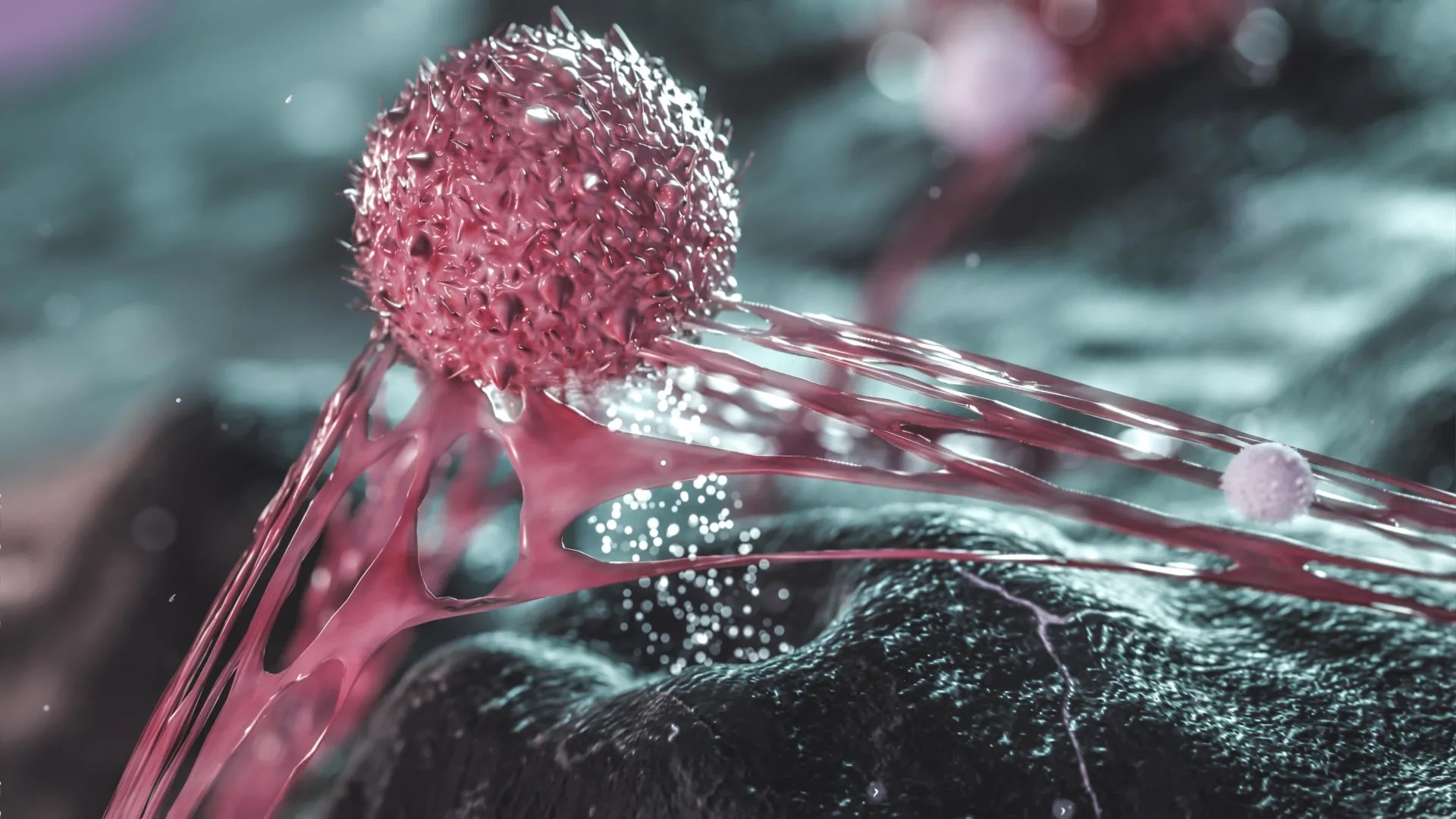
Chemotherapy doesn’t kill every tumor cell. Some survive. These survivors don’t just sit there waiting to be wiped out next round. They get to work.
Researchers at The Wistar Institute have uncovered a chilling detail about this survival. It involves sugar. Specifically, fructose.
When ovarian cancer cells survive platinum-based chemotherapy, they release chemical messages. These messages trick nearby cells. The result? They break free and spread. Metastasis.
“Some cancer cells that survive chemotherapy aren’t dividing… Instead, they continue to release molecules that send signs to nearby cells.”
Aidan Cole, the study’s lead author, put it plainly. Fructose is one of those signs. It acts as a signal for the cancer to move.
The Ghost Cells Driving Metastasis
Ovarian cancer is notorious for coming back. Most patients start with a strong response to chemo. The tumors shrink. Then, they return. Often, they have spread across the abdominal cavity.
This spread causes about 90% of deaths from ovarian cancer.
Scientists knew surviving cells might help this recurrence. But how? Do the cells themselves spread, or do they send instructions?
Cole and his team designed an experiment to separate the two. They collected the soup of molecules released by surviving cancer cells. Then they exposed healthy cancer cells to just that liquid.
The results were stark.
The liquid alone made other cells much more aggressive. It increased their ability to migrate.
“As far as we know, this is the first time anyone has shown, in a preclinical model rather than just in a petri dish, that it’s the molecules released, not the cells themselves, that drive the spread.
This distinction matters. The tumor is essentially radioing its location and strategy to the rest of the body.
Why Sugar Matters in Cancer Treatment
What is in that molecular soup?
The team identified fructose. High concentrations of it. The surviving cells weren’t just eating it; they were using it as a communication tool. They pump it out to tell neighbors: Go.
Even more troubling is what happens when patients consume fructose.
The study found that high levels of dietary fructose—levels comparable to a sugary soda—encourage cancer spread. This happens even if the patient hasn’t had chemo.
Fructose is everywhere in the US diet. High-fructose corn syrup can make up 8-20% of calorie intake for some people.
Unlike smoking or genetics, sugar is changeable. This suggests a simple lever that patients and doctors might pull. Lowering fructose could potentially slow progression.
Researchers haven’t tested this in human patients yet. But the link between nutrition and tumor behavior is now clear.
The Cholesterol Connection
How does fructose make cells detach?
The team used advanced screens, including CRISPR, to find the mechanism.
Fructose lowers cholesterol production inside neighboring cells.
Cholesterol isn’t just a bad thing for your heart. In cancer, it acts like glue. It helps cells stick to each other and to the tissue matrix.
Less cholesterol means weaker bonds.
When bonds weaken, cells separate easily. They detach from the primary tumor and slip into the bloodstream or lymph system.
This is a physical change. A common nutrient alters the physics of a tumor.
Statins and the Risk of Interaction
Here is where it gets clinically messy.
Statins are cholesterol-lowering drugs. 39 million Americans take them.
If fructose lowers cholesterol to help cancer spread, do statins do the same?
In the study, yes. Statins alone weakened the connections between cancer cell. They made escape easier.
The team is now investigating whether statins interfere with chemotherapy.
This is a sensitive topic. Ovarian cancer is most common in post-menopausal women. Many are already on statins for heart health.
Katherine Aird, the senior author, warns against panic.
“We haven’t tested this effect in patients,” she said. “But it raises questions about combining cholesterol-lowering with chemo.”
Don’t stop your statins. That advice stands firm. But it raises a red flag for doctors prescribing them alongside ovarian cancer treatments. The interaction is plausible. It needs testing.
Beyond Ovarian Cancer
Does this apply elsewhere?
Pancreatic cancer. Colon cancer. Liver cancer.
These tumors also spread within the torso. Aird thinks they might use the same fructose-cholesterol pathway.
“We can’t call it universal yet,” Aird said. “But we think the effects aren’t just limited to ovarian.”
The team is planning follow-up studies. They want to see if blocking this signal works in other models.
The implications stretch far beyond a single disease. If common nutrients and common drugs can trigger metastasis, oncology is missing a variable.
The sugar in your soda isn’t just empty calories. It’s fuel for escape.
The science is early. But the signal is loud.


