The Cost of Connection
Bethanie was eighteen when she started The Garcia Diaries in 2013, married, pregnant, and bored while her husband worked nights at UPS. She blogged about bacon-wrapped chicken and how to handle body image shifts postpartum. It was a creative outlet, sure. But mostly it became a business.
She didn’t have a college degree. Just a laptop and five kids now. Supporting her family as the primary breadwinner was “wild” and a dream realized, she says. Still, she doesn’t post on the blog anymore. She has nearly 340,1000 Instagram followers. She posts hourly. Daily. About outfits. About meals. About her kids.
Bethanie admits she worries she shared too much. If she could rewind ten years? No names. No faces. But the content exists. You can’t delete a decade.
She tells a story about Target. Her son Deuce was sitting in the cart handle. She turned her head. Someone walked up and asked, “Deuce, is that you?” He was three or four. Unbothered. She froze. Terrified. She jumped to the front of the stroller, physically shielding him from the stranger who just wanted a fan moment. It felt unsafe.
“I think I know the right thing to do deep down,” she says, laughing nervously. “I probably should stop.”
She hasn’t stopped yet. But others have.
The Viral Pendulum Swing
Maia Knight made 8.1 million TikTok followers believe they were friends with a exhausted, loving single mom of twins. She filmed bottle prep. Morning stairs. The raw chaos of toddler life. Her daughters, Violet and Scout, became internet celebrities. Fans created memes about autocorrect failures—Salt & Vinegar, Silence & Violence. It sold merchandise. It built a brand.
Then, December 2023. Maia posted a video. No more faces.
“I’m not being forced,” she said. “I’m making a choice to protect them.”
She faced the backlash. She expected it. Detractors who felt owned by a stranger received a sharp response: maybe go to therapy. The videos changed. Backs. Sidelines. Emojis covering eyes. It was the end of the visual intimacy many followed her for.
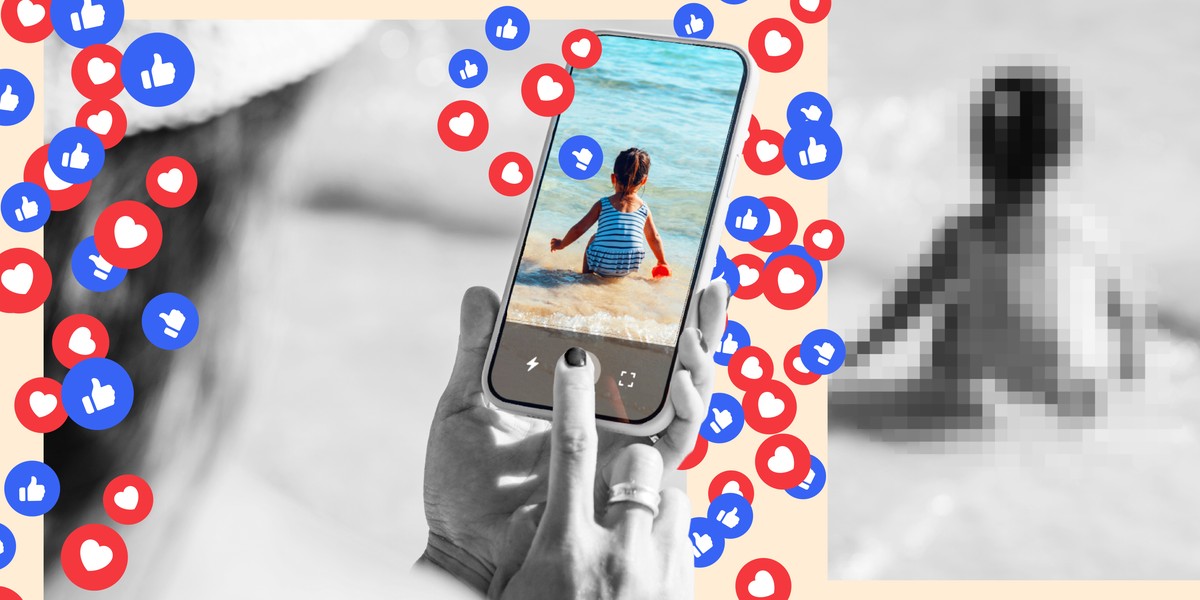
Dr. Michael Walrave, a communications professor at the University of Antwerp, has a term for this shift. Mindful sharenting. It’s the act of navigating parental performance while mitigating digital risk. Showing the baby from behind. Using digital masks. It allows the parent to say “I am parenting” without fully surrendering the child’s digital privacy.
Mindful sharenting lets you showcase parenthood while dodging the most obvious pitfalls of sharing your child’s data with the world.
Chasing the Algorithm
Not everyone started with caution. Some chased the lottery ticket.
Jillian Kalbaugh posted a video of her baby son sucking spaghetti. Millions of views. It went super mega viral. She leaned into it. “Oh great. My kid’s famous.” She filmed food reactions. Wings. Lemons. She vlogged daily.
She admits she wanted fame. It sounded like “the thing to do.”
But directing toddlers for content strips away authenticity. She deleted shots. Reshaped reality. Her older son tried to jump in for attention. She pushed him out of frame. Felt guilty later. Then excused herself by focusing on the next shoot. The cycle repeats.
Success was intermittent. One good video brought 5,000 followers in a day. The plateau arrived. She maxed out at 40,000. Not a life-changing amount. Then came the physical toll. Pregnancy. Misery. Sickness. Posting dropped. Views followed.
The final nail came from the darkest corner of the platform.
An anonymous user liked a video. Jillian checked the profile. The profile picture was a photo of her own son. Taken from a Christmas card two years prior. Stolen. Reused.
“It was scary and gross,” she recalls. A gut feeling of violation.
Coinciding with the Wren Eleanor scandal, where parents mobilized to condemn a mother posting arguably inappropriate toddler content, the mood shifted. Jillian stopped. She privatized her account. Removed the videos.
Would it be harder to quit if you had millions of followers?
“Yeah,” she says. The money had bought toys for the boys. That made it harder to let go.
The Gray Area
Is this a binary choice? Do you post your children and become an exploiter, or withhold them and become a saint? No.
The landscape is murky.
As the author’s own child grows, she chooses opacity. No names. No faces. Just tiny hands with dimples. The back of a round head. She shares with a small circle. Close Friends. It stems from an instinct during pregnancy. A desire to keep her precious child close to home rather than diluting her identity across the feed.
Her husband wants broader access. He wants to share with his circle. She balks.
Why?
Is it protection? Or anxiety?
How does an infant’s online presence affect their future self? Who grants consent to the toddler who cannot speak for their data? AI advancements add a layer of terror to these questions. Photos can be manipulated, reused, misused.
Parents are uneasy. They can’t pinpoint why. They just know it feels dangerous.
Maybe it is paranoia. Maybe it is simply the culture swinging back. We moved from oversharing everything to hoarding the sacred moments in private. Ten years ago, blurring faces seemed extreme. Now, it is just another Tuesday.
The choice remains yours. And the algorithm watches regardless. 📉