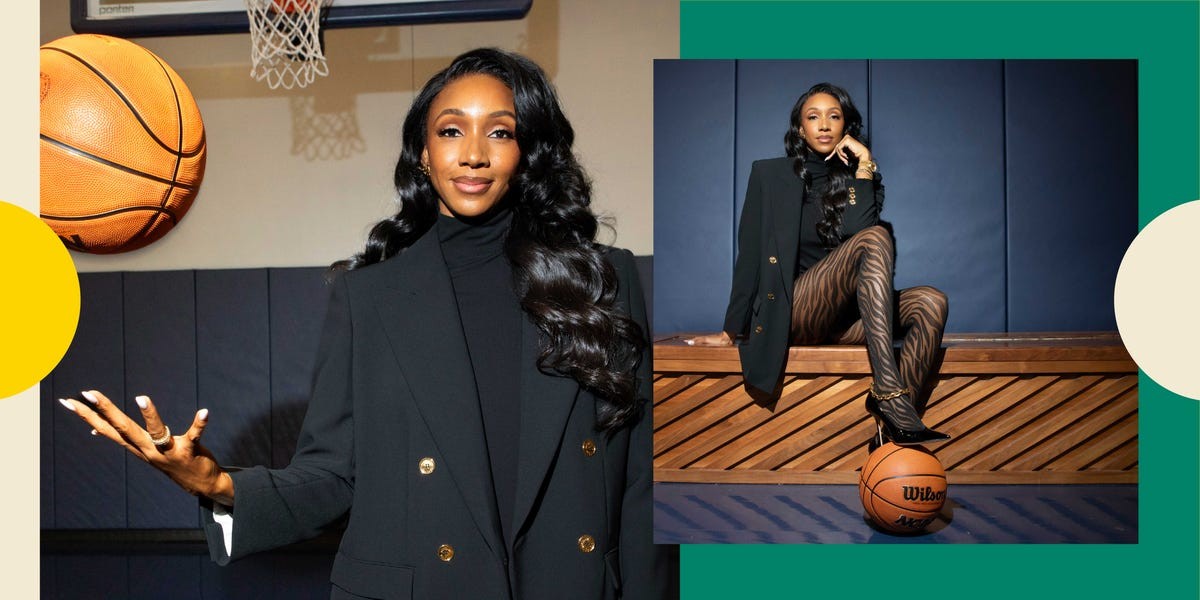
Sportscaster Maria Taylor has carved out a historic presence in sports broadcasting, yet her most profound recent transformation has occurred off the airwaves. While she recently hosted the Super Bowl LX pregame show, co-hosted late-night coverage for the Milan Olympics, and executive produced the docuseries Field Generals: History of the Black Quarterback, Taylor identifies becoming a mother to her two-year-old son, Roman, as her most rewarding achievement.
This shift in personal identity has fundamentally altered her professional demeanor. “That switched something in me where I felt like I don’t have to apologize for anything,” Taylor explains. “I don’t feel like I have to ask for permission. I deserve to be in the rooms. I’ve worked hard enough, and now I have to stand up and be the fullest version of myself so that my son can be a proud son.”
Balancing Biology and Broadcast
Taylor’s journey to motherhood was medically complex, involving three fibroid surgeries and multiple rounds of in-vitro fertilization (IVF). These personal challenges ran parallel to significant career milestones, creating a unique pressure cooker of professional and personal demands.
In 2022, her first embryo transfer failed the day before the NFL Hall of Fame Game. Shortly after, as she prepared for another IVF protocol, she made history as the first full-time female host of Football Night in America. The juxtaposition of these events forced a recalibration of her priorities.
“I’m at the IVF doctor in the morning, then going to do the show in the afternoon,” she recalls. This intense schedule helped her release self-imposed perfectionism. “It made me take a little bit of pressure off myself… Why don’t you find grace instead of critiquing every single thing you do? I need you to just exist at work so that we can really work hard over here in life.”
Redefining “Firsts” and Responsibility
Taylor’s career has been defined by breaking barriers, a theme she connects deeply to her personal narrative. Earlier this year, she became the first Black woman to present the Vince Lombardi Trophy at the Super Bowl. Rather than shying away from the historical weight of these moments, she embraces them.
“I’ve been the only one in the room or the first one, and I recognize the weight that comes with it and I recognize the responsibility,” Taylor says. This perspective fuels her passion for storytelling, particularly highlighting trailblazers who paved the way. Through Field Generals, she sought to honor figures like James “Shack” Harris, the first Black quarterback to play in the Pro Bowl, ensuring their contributions are recognized.
“He deserves to know that he paved the way and that what he did was important.”
Integrating Motherhood into the Spotlight
Rather than separating her roles, Taylor integrates her identity as a mother into her high-profile work. Roman has become part of her biggest moments, whether through her experiencing contractions at the Football Night in America desk or pumping breast milk on a boat during the 2024 Summer Olympics in Paris just before interviewing flag bearers LeBron James and Coco Gauff.
These experiences reinforce her belief in her own capabilities. “I truly believe there’s nothing I can’t do,” she asserts. Her goal is to normalize the presence of women and mothers in sports media, arguing that the lack of visibility is not a reflection of talent but of opportunity.
“If we have done our job, then you can come to the water cooler and have a conversation about these courageous, strong moms, women who are going after their dreams,” Taylor says. “The product is good because the women are great—you just haven’t seen them. So here you go.”
From Athlete to Storyteller
Taylor’s connection to sports is rooted in her upbringing in a family of basketball players and her own dual-sport career in basketball and volleyball at the University of Georgia. Watching Team USA’s women win gold in her hometown of Atlanta in 1996 inspired her initially to become an Olympian. However, facing the choice between playing volleyball overseas or pursuing broadcasting, she chose the latter.
Transitioning from athlete to broadcaster was challenging, requiring her to redefine her identity. She immersed herself in the craft, attending every practice and conducting as many interviews as possible. A pivotal moment came when she interviewed legendary University of Tennessee basketball coach Pat Summitt, confirming her calling in journalism.
Today, Taylor focuses on diversifying who tells sports stories. “That’s why you need different people behind the camera and telling the stories and deciding the stories to tell,” she notes. She views this diversity not just as a moral imperative but as essential for accurate and comprehensive storytelling.
Daily Rituals for Grounding and Growth
To manage the demands of her career and family life, Taylor relies on specific daily practices:
- Touch Grass: For Taylor, this means grounding herself physically. She prioritizes morning workouts to connect with her body and elevate her heart rate.
- Handwritten Planning: She rejects digital scheduling in favor of handwritten plans, mapping out her day with precision—from Roman’s wake-up time to the nanny’s arrival.
- Leading with Trust: When days become chaotic, she returns to a mindset of trust. “I trust that this is happening the way it’s supposed to happen, and I’m grateful that it’s about to happen the way it’s supposed to happen,” she says.
Conclusion
Maria Taylor’s career exemplifies the evolution of sports media, where personal authenticity and professional excellence intersect. By embracing her role as a mother and a trailblazer, she challenges industry norms and expands the narrative of who belongs in sports broadcasting. Her journey underscores a simple truth: change happens when individuals refuse to wait for permission and instead create their own space.