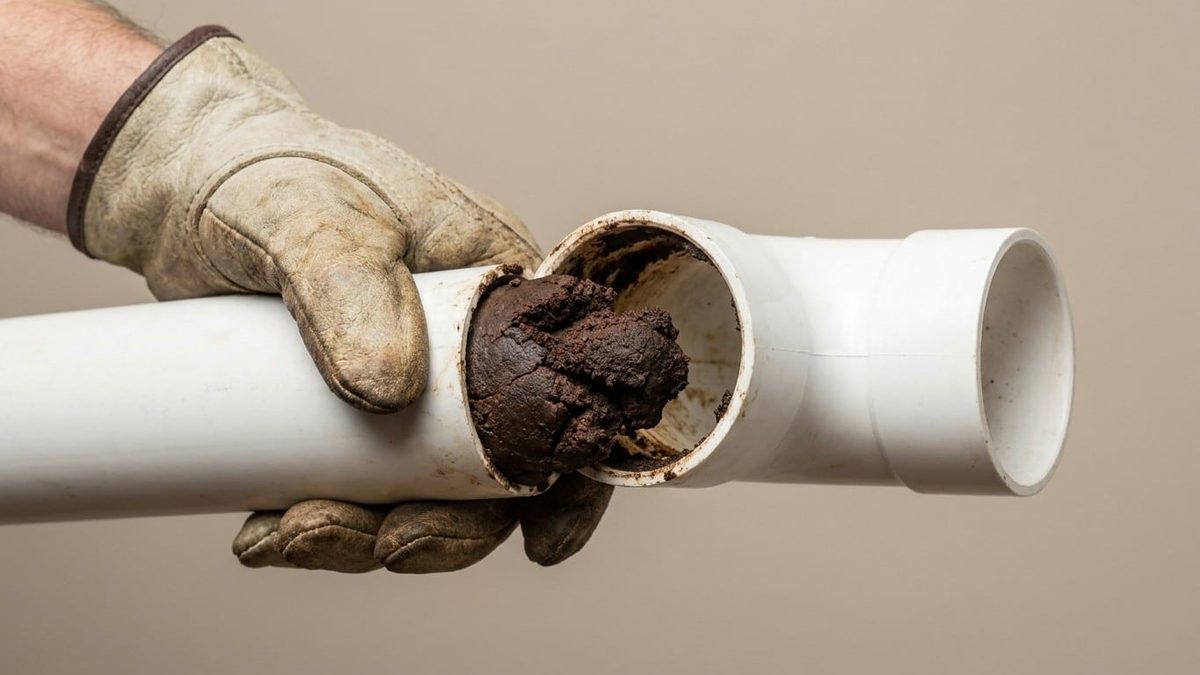
It’s a morning ritual for millions of households. You finish your brew, dump the wet grounds into the sink, and rinse them away with hot water. You feel good about it. No waste. No plastic pods. Just a natural, eco-friendly flush that supposedly keeps your pipes clean and odor-free.
It feels responsible. It looks clean.
And it is quietly turning your plumbing into a disaster.
The plumber who eventually has to crawl under your sink sees something entirely different from the “eco-conscious” routine upstairs. He doesn’t see a clean pipe. He sees a compact, brown, rock-hard mass. It looks less like organic waste and more like hardened cement. And he knows exactly where it came from.
The Myth of the Natural Scrubber
The idea has circulated for decades. Coffee grounds are abrasive, right? So, logic follows, they should scrub the inside of your pipes, scraping away soap scum and grease. Add in their reputation as a natural deodorizer, and you have the perfect zero-waste hack for the modern home.
It sounds logical. Until the water hits the siphon.
Here is the reality: coffee grounds do not dissolve in water. They are made of fine, fibrous particles. When they hit the moisture in your pipes, they don’t act like sandpaper. They clump. They absorb water. They form hard aggregates.
Every kitchen sink has a P-trap or siphon—the U-shaped pipe designed to hold a small amount of water to block sewer gases. Coffee grounds are heavy and dense. They settle at the bottom of this curve. They don’t wash away. They stack up. Day after day. Pot after pot.
The Fatal Mix: Coffee and Grease
A layer of coffee grounds alone is annoying. A layer combined with kitchen grease is catastrophic.
Your dishwater isn’t just water. It carries traces of cooking oil, butter, and sauce residues. When coffee grounds meet these fats, they don’t just float past. They bind. The grounds act like a net, catching the fats, while the fats glue the grounds together.
The result is a paste that hardens over time. It is surprisingly similar to concrete.
This is dangerous because it’s slow. For months, your sink might drain just fine. It might even seem faster than before because the grounds are “scrubbing.” But underneath that illusion, a boulder is forming. Eventually, the flow slows. Then it stops. If you keep pouring grounds in, you aren’t cleaning the pipe; you are building a wall.
A clog this dense often resists standard plungers or hand-cranked augers. By the time it blocks completely, you are looking at a hydro-jetting service call. And a price tag that makes the cost of a compost bin look like a bargain.
What Professionals Actually See
Data supports what plumbers see on the job daily. Approximately 70% of plumbing professionals actively advise against pouring coffee grounds down the drain. This isn’t a niche opinion. It’s a daily reality for drainage specialists.
When they pull a clog from a kitchen line, they can often identify coffee grounds immediately by the color and texture. It’s a recurring cause of blockage, not an occasional accident.
The problem is compounded in older homes. Apartments in Haussmannian buildings or houses from the 1970s often have narrower pipes. These pipes have zero tolerance for debris. Even small amounts of accumulated sediment can restrict flow significantly.
Coffee is lipophilic. That means it is attracted to fats. It doesn’t sit passively in the pipe. It actively seeks out the grease already clinging to the walls. It latches on. It grows.
So, that morning rinse? It isn’t cleaning your pipes. It is feeding a slow-motion blockage that will eventually cost you far more than the price of a compost bin.
Keep drains clear without harsh chemicals
Stop letting coffee grounds clog your pipes. It is a simple switch that saves money and keeps things flowing. The solution is already in your kitchen. You just need to use the right mixture.
Baking soda and white vinegar work well together. They create a fizzy reaction that loosens buildup. This also kills odors. You do not damage your pipes with this method. Just pour four or five tablespoons of baking soda into a dry drain. Add 200ml of white vinegar. Let it bubble for 15 minutes. Rinse with one to two liters of boiling water. Do this once a week. Your pipes will thank you.
Hot water helps too. Pour two liters of very hot water down the drain weekly. This melts hardened grease. It stops the grease from trapping other debris. It is free. It is safe. It prevents clogs.
Buy a simple wire basket for your sink. It costs about three euros. It catches crumbs, hair, and skin flakes. Keep them out of the pipe. It is the best plumbing investment for your home.
Repurpose coffee grounds wisely
Do not throw them away. Coffee grounds have better uses elsewhere. In the garden, they are a natural fertilizer. They add nitrogen to the soil. They also repel slugs.
Use dry grounds to remove smells. Put a small bowl in the fridge. It absorbs tough odors. You can also use them on your skin. Mix grounds with coconut oil. This makes a natural scrub. It removes dead skin cells. Use it on your face in the morning. Compost the rest at night. Your pipes stay clear all year.
This matters more than you think. Septic systems do not like solid waste. Hard-to-break-down materials cause problems. If you live in a rural area, you likely have a septic tank. Putting coffee grounds in the sink is risky. It can damage your waste treatment system. You might need to pump it out sooner than planned.
Think before you rinse. Small habits protect your home. And your wallet.