For many, the holiday meal centers around a cured ham—a glossy, sweet centerpiece that often feels… predictable. But a properly prepared fresh ham, roasted to perfection with a vibrant glaze, offers a more impressive, flavorful, and often more affordable alternative.
This isn’t simply about switching cuts; it’s about elevating the entire roast experience. Fresh ham delivers the grand presentation and carving-table drama of a traditional centerpiece, but with a deeper pork flavor that’s often lost in the sweetness of cured varieties.
Choosing and Preparing Your Fresh Ham
Fresh ham, sometimes called “green ham” by butchers, is a bone-in pork roast from the hind leg. Specify “fresh, uncured, skin-on” to avoid confusion. The shank end is generally easier to carve and cooks more evenly, though either end will work with a roast weighing 8-10 pounds.
The key to success lies in preparation. Unlike fattier cuts like pork shoulder, fresh ham is relatively lean. Leaving the skin on initially allows you to trim it down to a ¼- to ½-inch fat cap—essential for basting and retaining moisture during cooking. Scoring the fat cap (crosshatching) isn’t just aesthetic; it helps render the fat, creating crispy edges and allowing seasonings to penetrate deeper.
Dry-Brining for Maximum Flavor and Juiciness
Seasoning a large roast requires more than a quick sprinkle. Julia Levy, from Serious Eats’ Birmingham test kitchen, advocates for dry-brining: a process where salt slowly permeates the meat, breaking down muscle proteins and enhancing moisture retention.
- Cut a small pocket into the ham to create a direct path for seasoning.
- Combine salt, sugar, garlic, orange zest, thyme, rosemary, and fennel for a festive aromatic blend.
- Let the ham rest for optimal flavor infusion.
This method ensures the seasoning reaches the center, not just the surface.
Roasting: Low and Slow for Tender Perfection
Resist the urge to blast the ham with high heat. Fresh ham lacks the connective tissue of pork shoulder, meaning it will dry out quickly at high temperatures. Roast low and slow until the internal temperature reaches 130°F. Finish with a high-heat glaze stage to bring it up to around 140°F before resting. Carryover heat will bring the final temperature to 150-155°F—perfectly cooked, juicy, and safe.
The Maple-Bourbon Glaze: A Sweet and Savory Finish
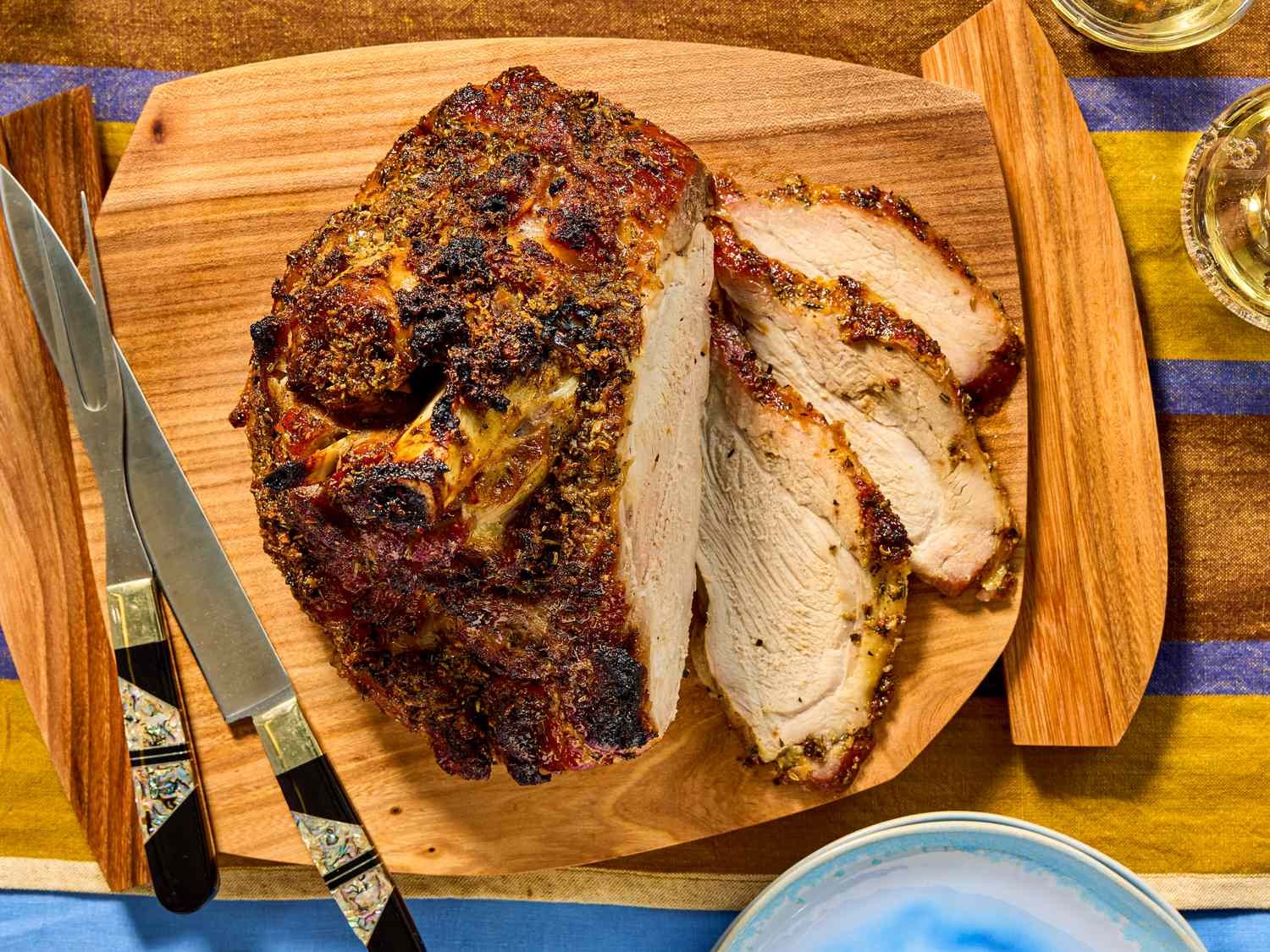
The glaze—maple syrup, bourbon, Dijon mustard, and black pepper—should be applied only at the end of cooking. Too early, and it burns; too late, and it won’t set properly. This two-stage glazing creates a lacquered, burnished surface without sacrificing tenderness.
Serving: Maximize Flavor and Moisture
Carve across the grain into ¼-inch slices and arrange on a platter. Don’t discard the pan drippings. The roasted oranges infuse the drippings with citrus warmth, adding moisture and brightness when spooned over the sliced ham.
A fresh ham, when prepared thoughtfully, isn’t just a meal; it’s a statement. It’s a reminder that the most memorable dishes are often those that demand a little more intention.