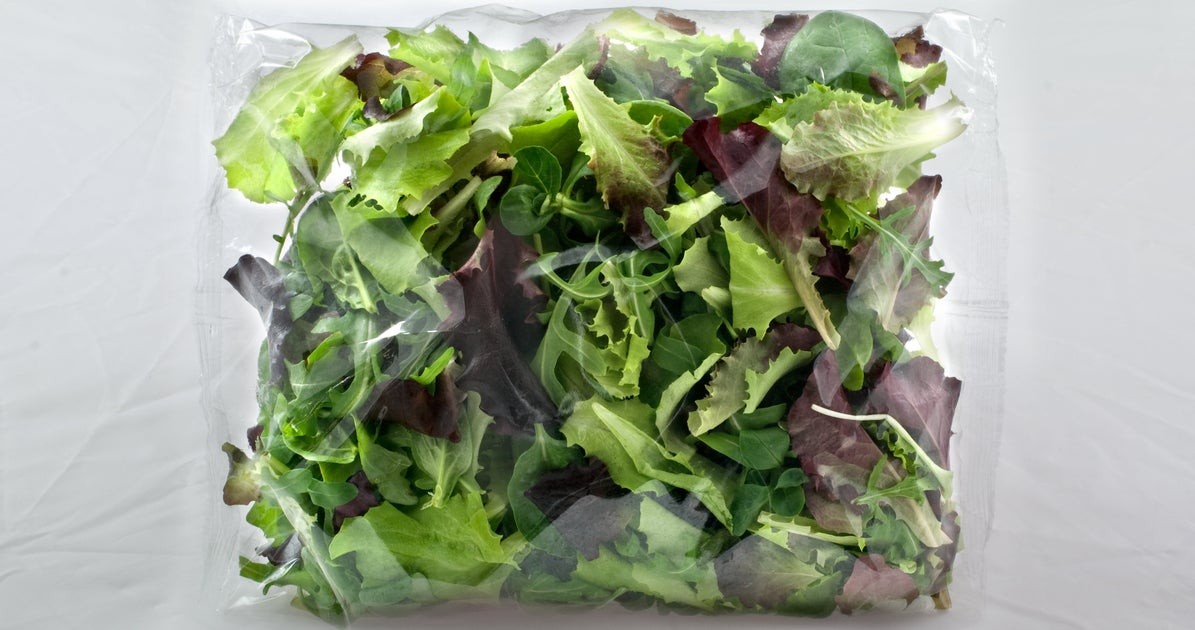
For many shoppers, prewashed bagged greens are a staple of a healthy, efficient lifestyle. They offer a quick way to add nutrients to a meal without the hassle of washing and chopping. However, food safety experts warn that this convenience comes with a significant hidden cost: bagged salads are among the riskiest items in the grocery store.
While they appear clean, these products are frequently linked to outbreaks of dangerous pathogens like E. coli, Listeria, and Salmonella. Because these bacteria are invisible to the eye, smell, and taste, consumers often have no way of knowing if their salad is a health hazard until they fall ill.
Why Bagged Greens Are High-Risk
The primary issue with bagged greens lies in the way they are produced and processed. Unlike a single head of lettuce, bagged salads are often a “composite” product, meaning they are gathered from multiple farms and processed in centralized facilities.
This creates two major vulnerabilities:
1. The Multiplier Effect: In a processing plant, greens from various sources are mixed, washed, and packaged in massive batches. If even one batch of leaves from a single farm is contaminated, that pathogen can be distributed across thousands of bags, potentially affecting multiple states simultaneously.
2. Difficult Traceability: Because the contents are a mix of different crops, it is much harder for authorities to trace an outbreak back to a specific source, delaying recalls and prolonging public risk.
The Journey of Contamination: From Farm to Table
Contamination can occur at almost every stage of the supply chain. Understanding these stages helps explain why leafy greens remain a persistent problem for food safety regulators.
1. On the Farm
Pathogens often enter the food chain through environmental factors. Experts note that fields located near large-scale livestock operations are at higher risk. Runoff from manure lagoons —large pits used to store animal waste—can seep into irrigation canals, introducing deadly bacteria like E. coli O157:H7 into the crops. Additionally, the use of untreated surface water from rivers or lakes for irrigation provides a direct pathway for bacteria to reach the plants.
2. In the Processing Plant
Once harvested, the greens undergo industrial washing. While intended to clean the product, large-scale washing vats can actually become a mechanism for spreading bacteria if the water or equipment is not perfectly sanitized.
3. During Distribution
Temperature control is critical, but not foolproof. While refrigeration slows the growth of bacteria, it does not kill them. If the “cold chain” is broken—such as leaving groceries in a warm car or during transit—bacteria can multiply rapidly within the bag.
Common Misconceptions About Safety
One of the most dangerous misconceptions is that you can “wash away” the risk at home.
- Washing won’t help: Experts warn against re-washing prewashed greens. Bacteria often form biofilms —slimy layers that allow them to stick firmly to the surface of the leaf. A simple rinse under a kitchen tap will not remove these pathogens.
- Home hygiene risks: Attempting to wash bagged greens at home can actually introduce new bacteria from a dirty sink, unwashed hands, or contaminated utensils.
- The “Raw” Problem: Unlike meat or other produce that can be cooked to kill pathogens, leafy greens are almost always eaten raw, leaving no “safety net” of heat to eliminate bacteria.
How to Minimize Your Risk
If you choose to continue buying bagged greens, you can take steps to reduce your exposure to illness:
- Verify Safety: Before buying, check the FDA and CDC websites for any recent recalls regarding leafy greens.
- Inspect the Packaging: Avoid bags that contain excess moisture, wilting, discoloration, or “slimy” leaves. These are signs of spoilage and potential bacterial growth.
- Manage Temperature: Get your greens home quickly and store them in a refrigerator kept at or below 40°F (4°C).
- The Safest Alternative: Whenever possible, buy whole heads of lettuce or bunches of spinach. Whole produce has significantly less surface area for contamination and allows you to control the washing process yourself at home.
Summary: While bagged greens offer unmatched convenience, their complex supply chain and tendency to be eaten raw make them a frequent source of foodborne illness. To stay safe, prioritize whole produce and stay vigilant about food recalls.