Forget whatever side dish you’ve been forcing onto the dinner table. This isn’t a chore. It’s the answer.
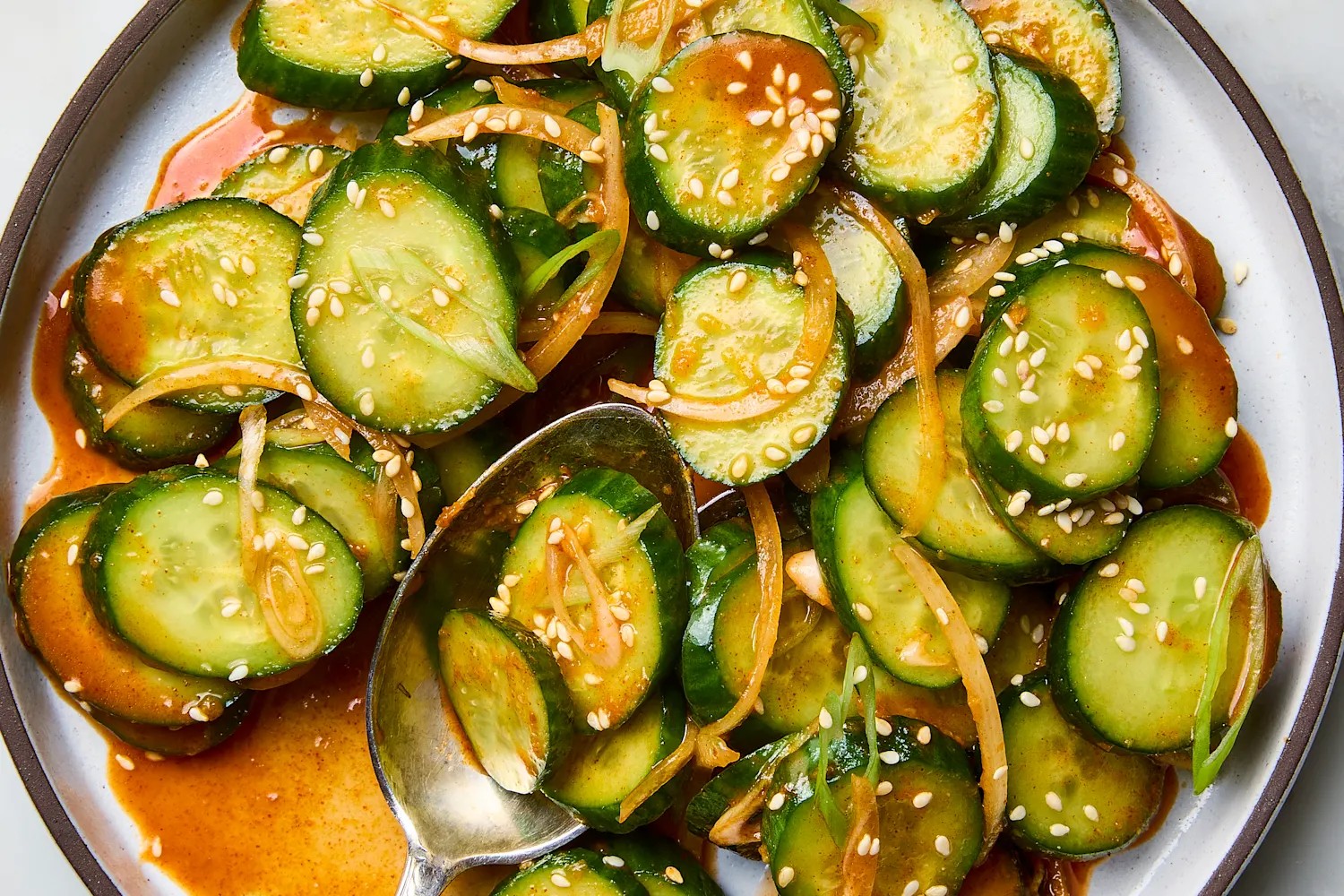
Gochujang cucumber salad. Three ingredients, basically. Or maybe six, if you count the pantry staples you probably have anyway.
Crisp vegetables meet a dressing that hits every note—sweet, spicy, tangy, savory—all at once.
It’s the kind of food you eat while staring out a window wondering if summer will ever end.
Where the hell does this come from?
I grew up in Albany Park. Chicago. Before everyone decided to be trendy and move there, we called it Koreatown. My childhood palate was wired on banchan —those little side dishes that define Korean home cooking. Specifically, oi muchim (spicy dressed cucumber) and oi sobagi (cucumber stuffed with filling).
Classic recipes usually lean on gochugaru, the Korean red pepper flakes. Sure, they provide heat. But I’ve always preferred the complexity of gochujang. That thick, fermented red pepper paste. It brings the spice, yes. But it also carries a deep sweetness and an umami depth that flakes just don’t touch.
It’s efficiency in a jar.
So, when I make this salad, I’m not following some ancient strict ritual. I’m grabbing the thick paste from my fridge. It’s easier. Faster. And, honestly? Better.
The mechanics of crisp
This is not a mushy salad. It cannot be. The texture is the point.
Mini cucumbers are non-negotiable here, mostly because they stay crunchier. Their skins are thin enough that peeling feels like unnecessary labor. Just slice them into thick rounds. One quarter inch is the sweet spot. Thick enough to bite. Thin enough to swallow.
If you’re stuck with massive English cucumbers at the store, use those. Halve them lengthwise. Cut crosswise. It works, though you lose a little of the “bite” integrity.
The dressing is simple but aggressive.
- Gochujang : The star. The soul.
- Rice vinegar : Cuts through the fat and paste, adding that sharp, bright acidity. Without it, the salad is heavy.
- Soy sauce : Saltiness. Balance.
- Honey : A tiny bridge to the heat.
- Sesame oil : Toasted, nutty, aromatic. Do not skimp on this.
- Garlic and ginger : Finely grated. Use a microplane if you have one. You want them to dissolve into the oil, not float as chunks.
Yellow onion provides a little raw bite, though red onion or shallots work if you prefer milder notes. Scallions go on top. Because it looks better that way.
“The dressing is everything… I would totally serve this with grilled meat, fish, or rice.”
— Christine, Recipe Tester
She’s not wrong. But let’s be honest. It tastes good enough on its own.
What eats what?
This salad is the yin to all kinds of yangs.
It sits next to Korean BBQ like it belongs there. Because it does. It cuts through the rich, fatty meats. It cleans the palate.
Serve it with fried rice. Leftover rice, specifically. It’s a weeknight lifesaver.
Put it next to fried chicken. American fried chicken? Korean dakgangjeong? Doesn’t matter. The heat from the salad wakes up the heaviness of the batter.
I’ve even put it on the table with hot dogs. And grilled burgers. Why not? The acidity of the vinegar does wonders against the char of the grill.
Is there any limit to its pairing capabilities? Maybe not. But try putting it on a sad plate of plain rice. You’ll understand.
The recipe (because I’m not writing fiction)
This isn’t rocket science. It’s mixing ingredients.
- Whisk 2 tablespoons gochujang, 2 tablespoons rice vinegar, 1 tablespoon soy sauce, 2 teaspoons honey, 2 teaspoons toasted sesame oil, 1 grated clove garlic, and 1 teaspoon grated ginger.
- Dump in 1 pound of sliced mini cucumbers, 1/4 sliced yellow onion, and 2 sliced scallions.
- Toss it. Make sure everything is coated. The dressing should cling.
- Garnish with toasted sesame seeds if you care about presentation. Which you do.
Notes for the anxious home cook
You can make the dressing a day ahead. Whisk it, store it, re-whisk it when ready. The flavors might marry a bit nicer.
The salad itself? Eat it fast.
Refrigerating it makes it watery. Cucumbers are mostly water. When salt and vinegar hit them, they release juices. That’s physics. By day two, the crispness is gone. The texture softens. The bowl becomes a soup of good intentions.
So, make it when you want it. Eat it now.
Nutritionally? It’s light. 59 calories a serving. Almost nothing. Mostly water and spice. Kid-friendly. Pescatarian-friendly. Basically safe for everyone.
Don’t overthink the ratios. Trust the gochujang. It rarely fails.
But ask yourself—are you saving the seeds? You should. Next time.