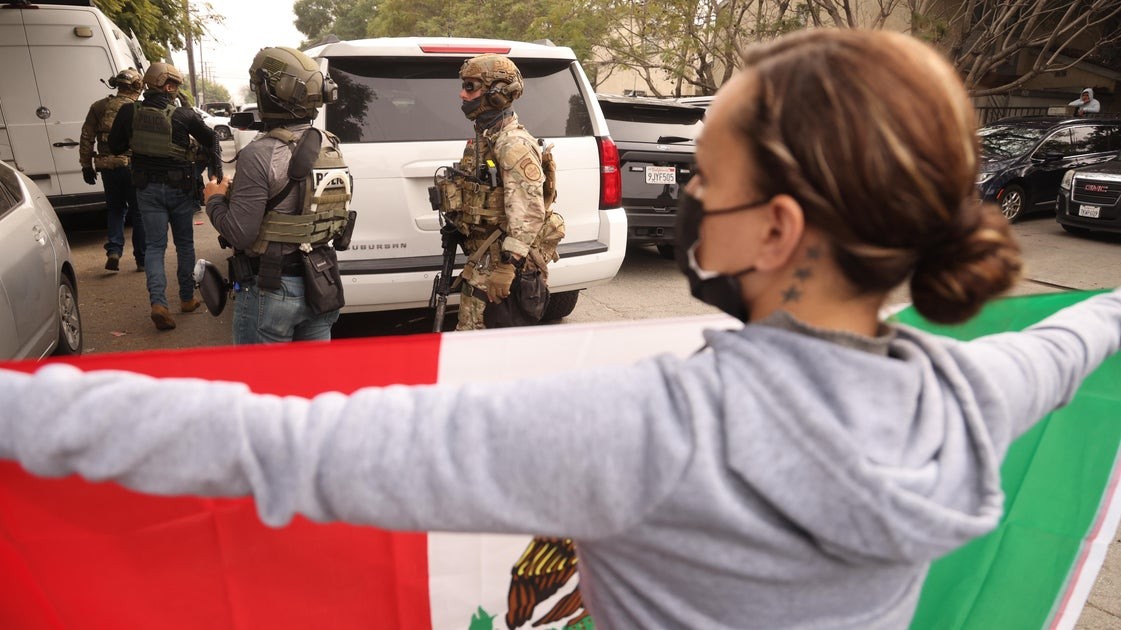
The recent actions of U.S. Immigration and Customs Enforcement (ICE) have ignited a fierce debate about the ethics of enforcement tactics, particularly when they disrupt the livelihoods of immigrant workers and exploit the cultural spaces they inhabit. The incident at El Tapatio, a family-run Mexican restaurant in Willmar, Minnesota, where ICE agents enjoyed lunch before returning to detain three employees, underscores a disturbing trend: the weaponization of hospitality against the communities it serves.
The Pattern of Enforcement
This is not an isolated case. Across Minnesota and other states, ICE has intensified enforcement, with reports of home raids, sometimes without proper warrants, and a growing climate of fear among restaurant staff. The agency’s actions have coincided with increased federal deployments – including a potential 1,500-soldier mobilization ordered by former President Trump – further escalating tensions.
Restaurant owners, like Bruno in the Twin Cities, are now operating under constant anxiety. Many have locked their doors during service, fearing unannounced ICE entries, and have consulted lawyers to understand their rights during potential raids. The situation has led to some establishments closing temporarily as workers avoid risking deportation.
The Cruelty of Timing
The timing of the El Tapatio raid is particularly jarring. Agents dined at the restaurant, were served by frightened but accommodating staff, and then returned hours later to make arrests. This act has been widely condemned as a betrayal of cultural norms, with some observers comparing it to a violation of sacred hospitality. Historian Patrick Wyman described it as “the kind of shit that would make you completely outside the bounds of any ancient society,” suggesting that such behavior would incur generational curses in older cultures.
Beyond Mexican Restaurants
The issue extends beyond Mexican cuisine. Immigrant workers comprise 36% of restaurant owners and over 20% of the sector’s workforce, making ethnic restaurants easy targets for ICE. Reports have surfaced of agents entering establishments with weapons drawn, such as an incident at a Thai restaurant in St. Paul where an officer accused the owners of “hiding a kid.”
The Moral Dilemma
The incident has sparked a wider debate about who gets to enjoy cultural products like Mexican food if they support the enforcement policies that threaten the communities that create them. Some, like podcaster Jennifer Welch, have called for banning supporters of aggressive immigration policies from ethnic restaurants.
However, many owners, like Caro in Washington, D.C., believe that exclusion is counterproductive. She argues that continued hospitality can be a form of resistance, allowing for cultural exchange and the potential to change minds. Despite having lost employees to ICE raids herself, she remains committed to serving all customers, even those who hold opposing views.
The Human Cost
The consequences for workers are severe. Caro shared the story of a long-term manager who was detained and held for days without food before self-deporting to El Salvador, leaving behind his family in the U.S. His story is not unique, as many employees face the agonizing choice between prolonged detention and abandoning their lives in America.
The reality is that ICE’s actions are creating a climate of fear and instability within immigrant communities, forcing businesses to adapt while workers live under the constant threat of separation from their families and livelihoods. The incident at El Tapatio is a stark reminder that immigration enforcement is not just a bureaucratic process; it is a human tragedy unfolding in real time.
The escalation of ICE raids has brought the agency’s tactics under intense scrutiny, forcing businesses and communities to grapple with the moral implications of enforcement policies that exploit cultural norms and disrupt lives.