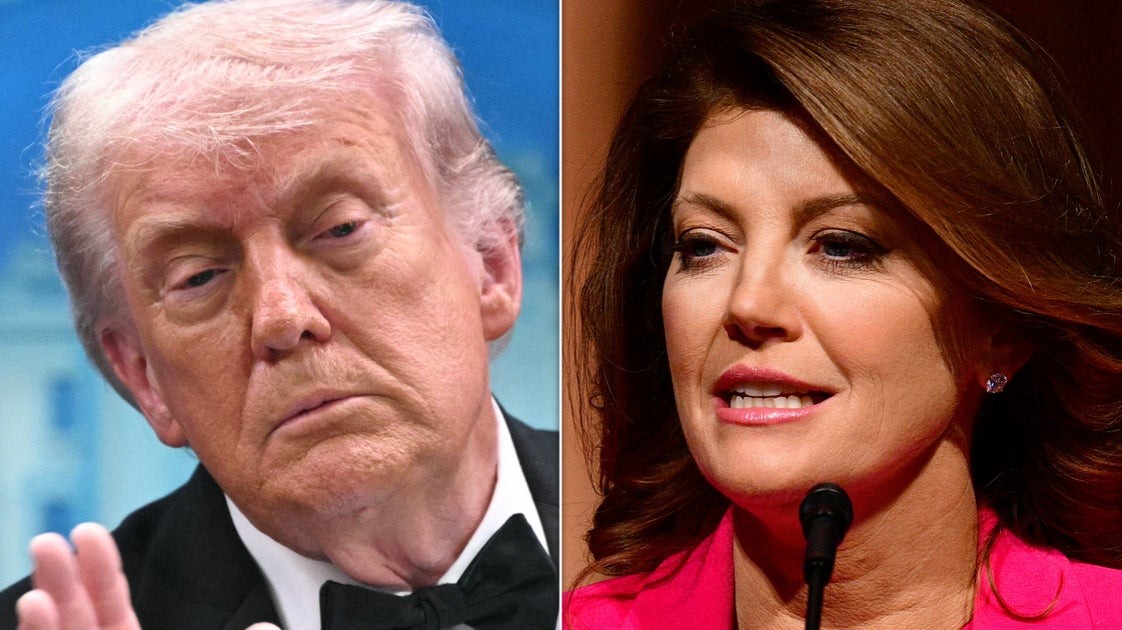
A recent interview on 60 Minutes between President Donald Trump and CBS anchor Norah O’Donnell has reignited a fierce debate regarding the relationship between the presidency and the free press. What began as a discussion regarding a recent shooting attempt quickly devolved into a heated exchange, characterized by personal insults and a direct confrontation over the role of journalism.
The Incident: From Inquiry to Insult
The tension surfaced when O’Donnell attempted to address the motivations behind a recent attack at the White House Correspondents’ Association dinner. Reading from a manifesto left by the suspect, O’Donnell presented Trump with specific, inflammatory allegations made by the individual, including claims that administration officials were “targets” and various personal accusations against the President.
Rather than addressing the content of the note, Trump redirected his response toward the interviewer.
- The Defense: Trump denied the allegations contained in the note, labeling them “crap” and asserting his innocence.
- The Retaliation: Trump accused O’Donnell and her colleagues of being “horrible people” and concluded by calling her a “disgrace.”
The suspect in the shooting, a 31-year-old facing potential life in prison, had reportedly sent messages to family members shortly before the attack, alluding to grievances against the administration.
Expert Analysis: A Pattern of Behavior
Media and political experts suggest that this exchange was not an isolated incident, but rather a predictable manifestation of Trump’s established communication style.
Peter Loge, director of the Project on Ethics in Political Communication at George Washington University, noted that Trump’s “first instinct” when confronted with uncomfortable facts is to attack. Loge identified a “perfect storm” in this specific interview: a female journalist asking a difficult question that challenged the President’s character.
Key observations from media experts include:
- Targeted Rhetoric: Experts point to a documented pattern of Trump using personal disparagement, often specifically targeting female journalists, to deflect from substantive questioning.
- Professional Resilience: Les Rose, a professor of journalism at Syracuse University, noted that veteran journalists like O’Donnell are trained to expect this “terrain.” He praised her steadiness, suggesting that her refusal to back down is a core component of her professional responsibility.
- The Role of the Press: The exchange serves as a case study in the tension between political leaders and the media. While leaders may find critical questioning frustrating, experts argue that such friction is a fundamental requirement of a functioning democracy.
Why This Matters: The Democratic Context
This confrontation raises significant questions about the health of the First Amendment and the boundaries of political discourse. In a democratic system, the press acts as a “watchdog,” tasked with holding those in power accountable. When a leader labels journalists as “disgraces” for performing this duty, it creates a chilling effect on public discourse.
“If a journalist isn’t holding power to account, a journalist isn’t doing their job,” stated Peter Loge.
The debate highlights a fundamental divide: Is the media a hostile entity to be combated, or is it a necessary institution designed to ensure transparency? For experts, the answer is clear—uncomfortable, pointed exchanges are not just a byproduct of politics, but a vital safeguard for accountability.
Conclusion: The clash between Trump and O’Donnell underscores a persistent conflict in American politics: the struggle between a presidency that seeks to control its narrative and a press constitutionally mandated to challenge it.