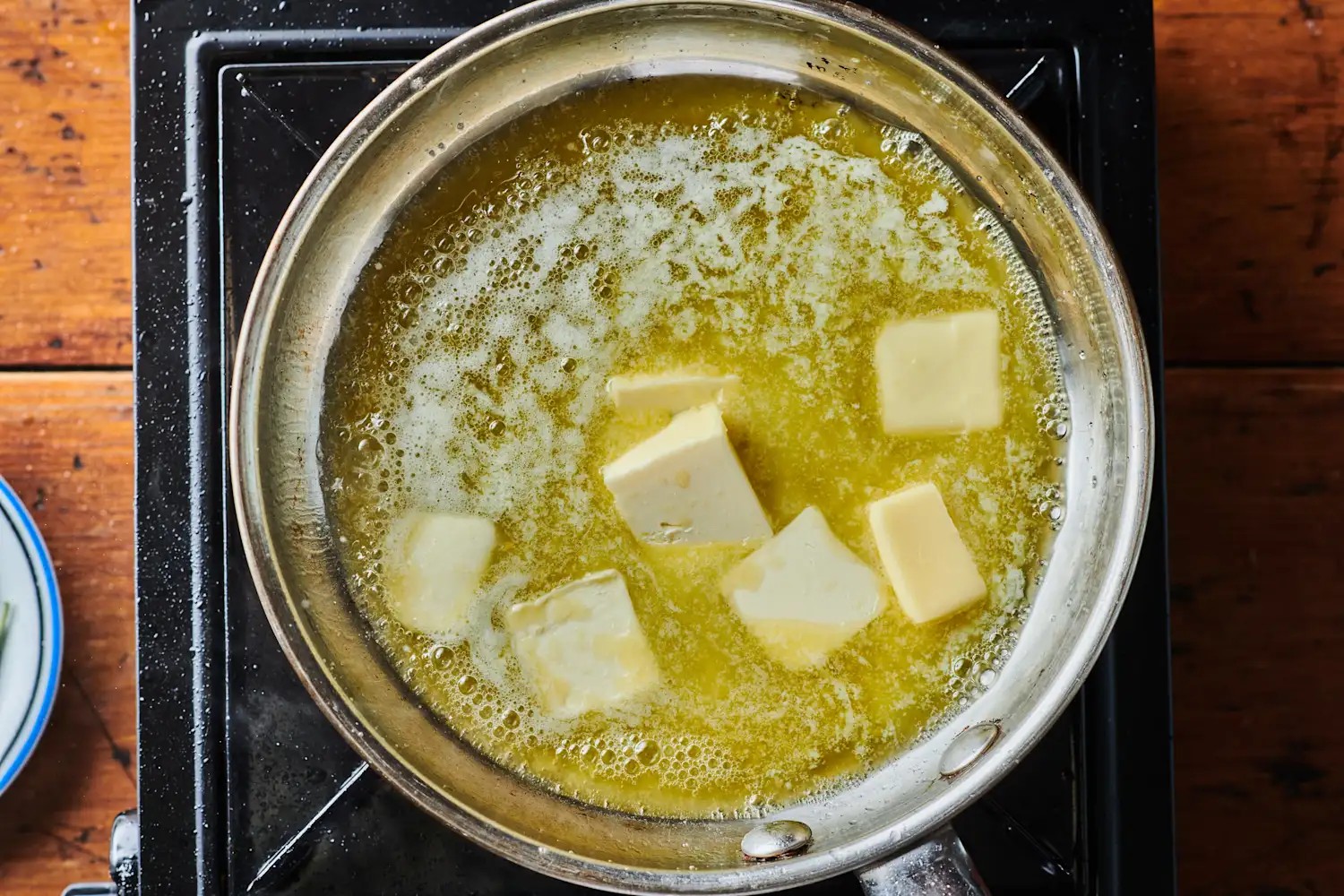
If you have ever tossed sautéed vegetables in melted butter only to find a greasy puddle at the bottom of the plate, you have encountered the primary limitation of simple melting. While melting butter is easy, it often results in a separation of fats and water, leaving your food lightly coated but lacking a cohesive, luxurious texture.
The professional solution to this problem is a classic French technique known as beurre monté.
What is Beurre Monté?
Beurre monté (literally “mounted butter”) is a simple yet transformative two-ingredient sauce made by emulsifying cold butter into warm water. Unlike standard melted butter, which separates into butterfat and milk solids, beurre monté creates a stable, thick, and glossy emulsion.
The result is a sauce that is deceptively light yet incredibly creamy. Because it is an emulsion, it possesses a unique “cling” factor; it coats vegetables in a smooth, velvety layer rather than sliding off them. This makes it an ideal finishing sauce for a wide variety of preparations, including steamed, boiled, roasted, or grilled vegetables.
Why This Technique Matters
In professional kitchens, the difference between a good dish and a great one often lies in the texture of the sauce. Beurre monté is a staple for several reasons:
- Superior Texture: It provides a rich mouthfeel without the heaviness of a flour-based roux.
- Visual Appeal: It imparts a high-gloss finish to vegetables, making even simple side dishes look restaurant-quality.
- Versatility: It serves as a blank canvas. You can leave it pure to highlight the natural flavor of spring vegetables like asparagus or radishes, or you can easily infuse it with lemon juice, garlic, or fresh herbs.
How to Make Beurre Monté
Achieving a perfect emulsion requires patience and temperature control. Follow these steps to ensure a smooth, stable sauce.
1. Preparation
The key to a stable emulsion is using cold butter.
– Cut your butter into small pieces (roughly 1/2 to 1 tablespoon each).
– Keep the pieces in the refrigerator until the exact moment you are ready to whisk them in.
– Ratio Tip: For approximately 2 pounds of vegetables, use 1/2 stick (4 tablespoons) of butter and about 1 tablespoon of water.
2. The Emulsion Process
- Heat the liquid: In a small saucepan, bring your water to a steaming state over low heat. Using a saucepan rather than a shallow skillet helps prevent splashing during whisking.
- Whisk gradually: Add the cold butter pieces one by one. Whisk constantly, adding the next piece only once the previous one has almost completely melted.
- Monitor the heat: The liquid should transform from a thin, pale liquid into a thick, soft yellow sauce. If you see bubbles forming at the edges, remove the pan from the heat immediately; boiling will break the emulsion.
3. Seasoning and Serving
Once the sauce is smooth, season with salt and pepper. Toss it immediately with your cooked vegetables or spoon it over them just before serving.
Note: Because the sauce is primarily butter, it will solidify as it cools. To maintain its fluid, pourable state, keep it gently warm.
Troubleshooting and Pro-Tips
- If the sauce separates: Don’t panic. If the sauce is still warm, try whisking it vigorously to encourage the fats to recombine. If it has cooled, gently warm it over very low heat while whisking constantly. Avoid high heat, as this will cause it to break again.
- Flavoring your sauce: To elevate the dish, add a tablespoon of lemon juice to the water at the start, or stir in minced garlic or finely chopped herbs once the emulsion is complete.
- Storage: Since it is difficult to make very small batches, save any leftovers in a sealed container in the fridge. You can use it for cooking just like regular butter, though it is not recommended for baking due to the water content.
- Butter choice: While unsalted butter is recommended to allow for precise seasoning, you can use salted, cultured, or high-fat European-style butter for different flavor profiles.
Summary
Beurre monté is a fundamental culinary tool that elevates simple vegetables into gourmet side dishes by creating a stable, glossy emulsion that clings perfectly to food. By mastering this two-ingredient technique, you can move beyond greasy melted butter to achieve professional-grade textures in your home kitchen.