


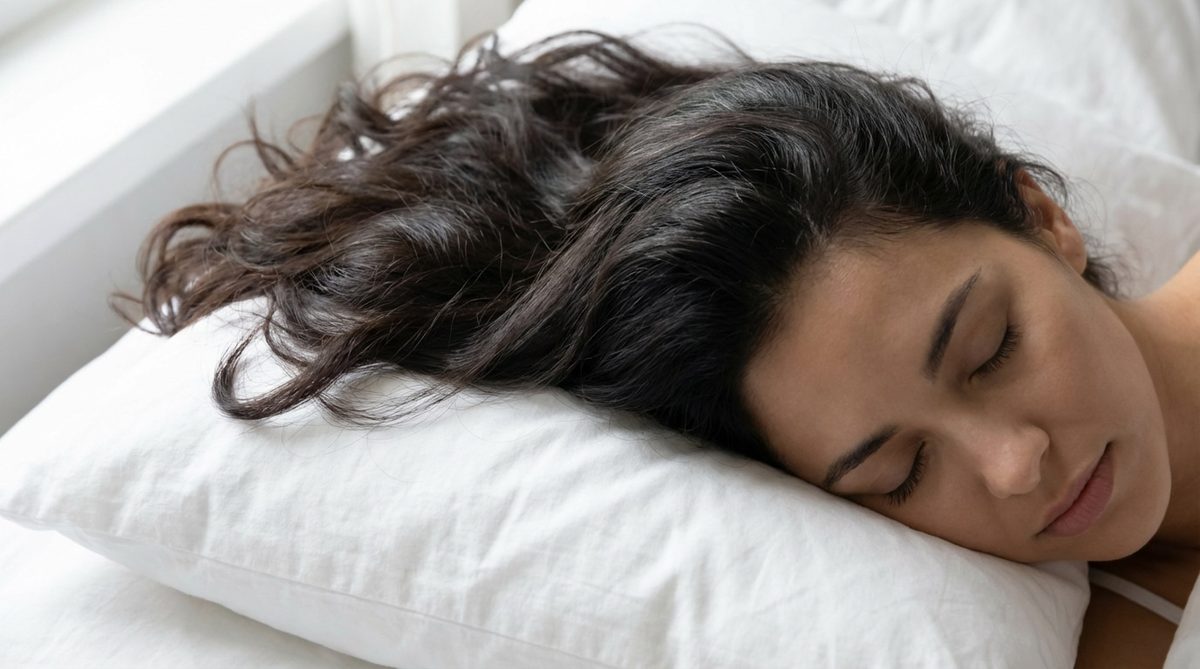
It’s 11:30 p.m. The winter wind howls outside. You just took a shower and you’re already exhausted. A hair dryer sat on the counter, radiating potential energy. The futon is waiting. You tell yourself it will dry overnight. You give in to the warmth. This small, harmless habit is the secret cause of dull hair and scalp irritation. A small change to this routine can make all the difference.
Time saving trap
We always strive for efficiency. Especially in winter, the days seem shorter. Skipping the drying step feels like a small win over time. We think we are robbing ourselves of precious sleep time. We just put our heads on the pillow. But this economy is an expensive illusion. The truth is, sleep isn’t as restful for your hair as you might think. As your body recovers, your hair suffers a slow. Silent degradation. It turns nighttime rest into an endurance test for keratin.
To understand the magnitude of this problem, you need to understand the biology of hair. A healthy hair shaft has a complex structure. It is protected by the cuticles. Leaving hair wet for hours leaves the hair structure very fragile. Hair is porous. It absorbs water and expands. This creates internal pressure on the cuticle and meant to protect it. Repeating this process every night will tire the fibers. This is hygral fatigue. Expansion and contraction weaken the internal structure. The result is limp. Hair becomes brittle and cannot retain its natural moisture for long periods of time.
Paper Towel Principle
Have you ever noticed that wet paper towel tear more easily than dry wipes? The principle is similar for your hair. Water changes the hydrogen bonds deep inside the fibers. This causes a temporary change in shape and elasticity. That elasticity helps with styling during blow-drying. It becomes your enemy while you sleep. Even touching the bedding can turn into aggression. Experts call this the “sandpaper effect”. Friction caused by fabric. Even plain cotton. acts like a rasp. Wet fibers are destroyed very easily.
We move a lot while we sleep. Every turn. Any friction of the head against the pillow is a mechanical attack. The natural flexibility is lost. Plus constant friction. It causes irreparable damage. Ends fray. Lengths break. You may notice little pieces of hair on your pillow in the morning. This is not normal hair loss. This is pure breakage. The weak structure allows moisture to linger for an unnecessarily long time.
Bacteria’s playground
Other than aesthetics and structure. Sleeping with wet hair can cause hygiene problems for the scalp. It is often overlooked. Imagine a warm environment. The head’s body heat mixes with the warmth of your winter blanket. The air is humid. dark. This is the definition of a bacterial incubator. The warmth and moisture between the pillow and the scalp is a perfect breeding ground for microorganisms. We believe that water can wash things away. Stagnant water. Promotes the growth of unwanted microorganisms.
This is often the answer to unexplained problems. Long-term moisture at night enables naturally occurring fungi to grow on the skin. Like malassezia. Usually harmless. But in the heat. humid environment. It overproliferates. Can you sleep with wet hair? Occasionally yes. However, it greatly favors scalp inflammation. The link is direct. The growth causes inflammation. Chronic itching can be unbearable. And dandruff. Greasy or dry. If you keep scratching for no reason. A damp pillow may be to blame.
The morning straw effect and the unwinnable knot battle
You know what this is like. When I wake up, my hair looks like straw. Today is not just a bad hair day. Structural damage is immediate.
If you go to bed with wet hair, you’re setting yourself a trap. The hair dries with a pillow and gets a messy, pressed shape. The cuticle (the small patch that covers the hair shaft) can dry improperly. They were not flat and smooth, but upright like rough shingles. The results were immediate and felt dull, rough, frizzy and untamed. Light is no longer reflected from smooth surfaces. It spreads. You look tired. Feels curly.
Then comes the real pain. Then comes the real pain: the detangling.
It is a mistake to try to comb dry, hardened hair while it is still fragile. You are pulling a frayed rope. No matter how much you pull and pull, the ends snap. The damage occurs in the middle and at the tip. This morning’s attack compounded the damage of the previous night. This is a vicious circle. If you don’t intervene, you have only one option. cutting it off.
Survival tips when you’re too tired to blow dry
Tell me the truth. Sometimes you just want to collapse. A hair dryer can seem like a big burden. If you must skip the blow-dry, do it strategically. You can’t just put your head on the pillow and hope for the best.
First squeeze out the water. Do not rub with a regular terry cloth. This friction raises the cuticles and adds fluffiness. Use a microfibre cloth or an old cotton t-shirt. Press lightly. Absorbs excess moisture without rubbing too hard. Drain as much water as possible before your head hits the pillow.
Next, upgrade your sleep surface. Silk and satin pillowcases are not a luxury trend. This is essential for healthy hair. Cotton absorbs moisture and causes friction. Silk provides a smooth surface for the hair to slide. Friction is dramatically reduced. Your strands don’t snag. Knots do not tighten.
Finally, don’t go to bed with wet hair loose. Tie it up. Loose, low braids or a very loose bun work well. Use a spiral hair tie or a fabric scrunchie. This keeps the fibers organized. Limit accidental rubbing on your pillowcase. Protect your structure while you sleep.
1 month change: visible change
This change is happening faster than you think. After a few weeks of following the routine (blow drying before bed and using the right materials) the difference is undeniable.
Let’s start with the scalp. The itching has stopped. The roots feel like they can breathe instead of suffocating. You will see the shine return in a few days. Why? This is because flipping your hair upside down or blow-drying with a brush helps align the cuticle in the right direction. The light hits the surface again. Soft is the default mode.
Night discipline guarantees beauty in the morning. After a month, the structure has changed considerably. Hair becomes more flexible. It is not fragile. You spend less time in the morning. The time “lost” in the evening is regained twice in the morning. No more fighting with iron. No more hiding rebel cowlicks.
The neat hair you had the night before is docile hair the next morning.
This is the beauty of slowness. It’s important to get things right the first time so that you don’t have to keep fixing things.
Sleeping with wet hair may seem harmless at the moment. It will cost more in the long run. Drying your hair with a hair dryer before going to bed is not just about looking pretty. This is scalp health. This is the integrity of the hair.
So why not spend a few extra minutes take the extra minutes for your hair or try your luck again?


