


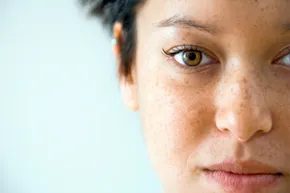
You step outside, the sun hits your face, and suddenly those tiny specks you ignored yesterday seem to have multiplied. They aren’t new. They’re just shouting.
This is why you should care about what happens under your skin when UV rays hit. It’s not magic. It’s biology.
We all have melanocytes. These are cells designed to protect us from harmful ultraviolet radiation. Their job is simple: produce melanin. Melanin is a pigmented protein. Think of it as internal sunglasses for your dermis. It absorbs UV light and makes skin darker. This is a defense mechanism.
In most people, melanocytes spread out evenly. Everyone. From the top of the head to the heels. When the sun hits evenly spaced cells, you get an even tan. The pigment distributes. The protection is uniform.
But some of us are different.
In those with freckles, melanocytes are bunched together. Clumped. Unevenly distributed. When UV rays strike these clusters, the cells go into overdrive. They pump out melanin right there, in that specific spot. The result? Scattered, dark spots. Freckles.
Since the skin between these clusters has fewer melanocytes, it doesn’t get the same level of protection. This is why you can burn even if you’re tanning elsewhere. The unclumped areas get scorched while the clumped areas get darker.
How Sun Exposure Changes Your Pigment Pattern
You might not have had freckles as a child. Many people develop them later. Why? Repeated sun exposure.
The sun doesn’t just change the color of existing freckles. It can trigger new clusters to form or become more active. This is why hands and faces are the usual suspects. We expose these areas most often. They take the brunt of the UV hit.
If you want to prevent freckles from appearing or darkening, the logic is straightforward. Limit the trigger.
- Wear sunscreen. A good one. Broad spectrum.
- Limit direct sun exposure.
- Avoid tanning booths. Artificial UV is just as potent as natural sunlight.
The goal isn’t to erase your skin. It’s to protect the melanocytes so they don’t overreact. So they don’t cluster so aggressively.
The Hidden Risk Behind the Beauty
Here is the part nobody likes to hear. Freckles themselves are harmless. They are cosmetic. They are genetic quirks.
But the skin that produces them is different.
People with freckles are at a higher risk for skin cancer. Not because the freckle is cancerous. But because the melanocyte activity in those areas indicates a skin type that is more vulnerable to UV damage. The same cells that create those cute little dots are also more prone to mutation when stressed by radiation.
Keep an eye on them.
If you notice changes in shape, color, or size, don’t ignore it. Contact a medical professional. Early detection is the only real defense against the darker consequences of sun exposure.
It’s a trade-off. Beauty and vulnerability often wear the same face. You can’t change your genetics. You can only manage the exposure.
The sun will always be there. It will always demand pigment. The question is whether you let it dictate your skin’s future, one freckle at a time.


