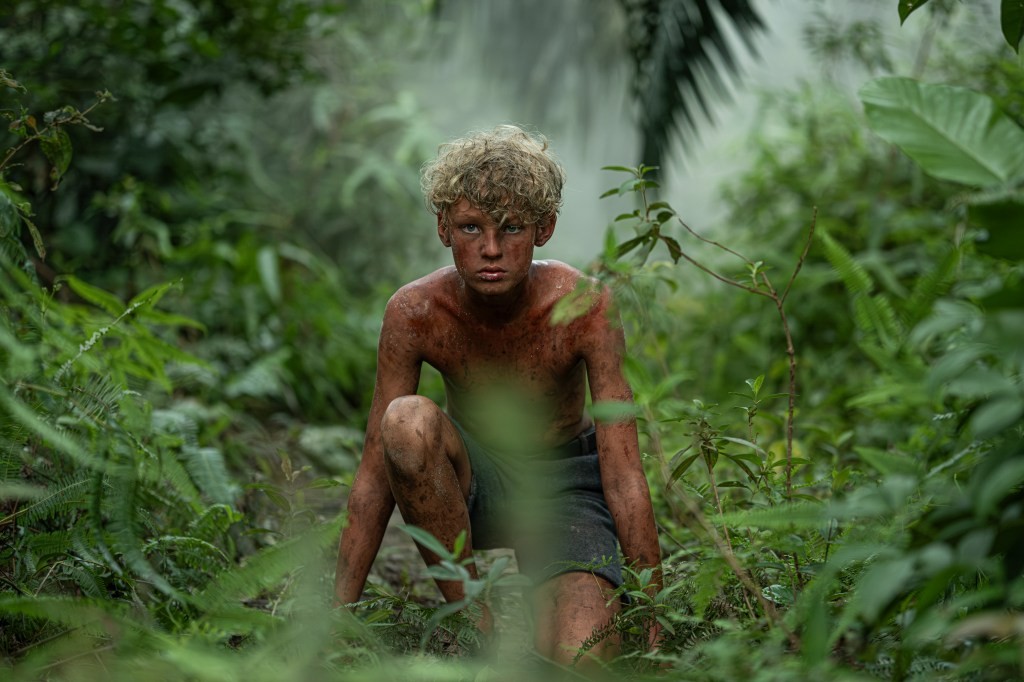
Netflix’s Lord of the Flies hits different this time.
It’s not just a story about boys getting lost on an island. It’s a autopsy of modern boyhood. What starts as survival morphs into something ugly: cruelty. Status games. Violence.
You watch it happen. Domino after domino. That’s the scary part. And that is where the lesson starts.
The Cost of Looking Weak
Take the scenes with Ralph and Piggy. They start off fine, friends even. But the moment they’re swallowed by the group dynamic? Ralph spills Piggy’s secrets. Betrayal 101.
Piggy spots the rotten wood. Warns everyone about the fire. Does anyone listen? No. He’s got zero status. Useless in the hierarchy.
Then there’s Jack. The hunt goes south. He freezes. Misses the kill. Now, look at what happens next. It’s a masterclass in deflection.
Piggy offers an out. He says Jack lost his nerve. Says not to worry. Promises to keep quiet. It’s an olive branch.
Jack eats the olive branch and burns the bridge. He insists he wasn’t scared. He blames Piggy. Calls him the scared one. Mocks him.
Why?
Because Jack knows something instinctual: vulnerability is expensive.
In Jack’s mind, showing fear costs him his spot in the pecking order. So he pivots. Hard. Fear turns to anger instantly. It’s not unique to the screen. It’s everywhere.
Boys feel embarrassed? They get mad. Rejected? They push harder. Exposed? They attack someone else. It’s armor. Thick and sharp.
“Boys and young men often face pressure to be tough.” — The Emotional Lives of Boys
The JED Foundation report nails it. Boys are taught to hide pain. To handle things alone. If you cry, you’re weak. So anger becomes the only acceptable language. It’s loud. It commands space.
Does this mean every angry boy is secretly depressed? No.
It means adults need to look deeper. Jack wasn’t just hunting pigs. He was hunting power. He wanted respect. Remember when his “new tribe” idea fell flat? No one joined. He cried. Alone. In the dark.
He couldn’t let the group see it. Because the rules don’t need speaking aloud to be enforced.
Sadness gets mocked. Poor performance on the field gets shamed. Awkward moments become memes. Screenshots live forever.
Breaking the Script
We can’t blame the kids. That’s unfair.
They’re growing up in an ecosystem that rewards this behavior. Parents didn’t create the script. Schools did. Sports teams. TikTok. Culture.
The adults on that island? They’re gone. The boys are stranded. But they don’t need teachers to be mean. They already know how. No one is there to hit pause. So the chaos runs its course. People die.
The job for us—parents, coaches, mentors—is simple. We have to interrupt the pattern before it hardens.
Here’s how:
Build Emotional Granularity
“Mad” is a lazy word. It’s too big. Peel it back.
Was he mad? Or was he embarrassed? Rejected? Overwhelmed? Ashamed?
Specificity is freedom. When a boy can name the feeling, he doesn’t have to weaponize it.
Adults Need to Get Weird (With Emotion)
Especially the men.
Boys need to see strong guys saying weak things. Without shame. Say you’re worried. Admit you need help. Talk about being sad. Don’t frame it as a failure. Frame it as data.
Stop the Teasing Cold
When boys mock each other’s vulnerability? Step in. Don’t just say “be nice.”
Try this: “Everybody feels hurt. How you treat someone who’s hurting matters.”
Or: “Needing help isn’t weakness. It’s how we get through hard things.”
These moments feel small. They matter more than you think.
They offer a new script. An alternative to the hunt.
Jack had too many feelings to say aloud: Fear. Shame. Loneliness. With no safe exit, they turned into cruelty. Control. Blame.
The Domino Still Stands
That’s the lesson we’re still missing.
Boys are allowed to feel everything. Not just anger. Not just aggression.
But the script keeps winning. The outcomes keep happening.
If we keep rewarding the armor, the kids will keep wearing it. The warning is obvious. The first domino never falls on its own. But it doesn’t fall by itself either.
Someone has to hold the line.
Dorian Johnson