


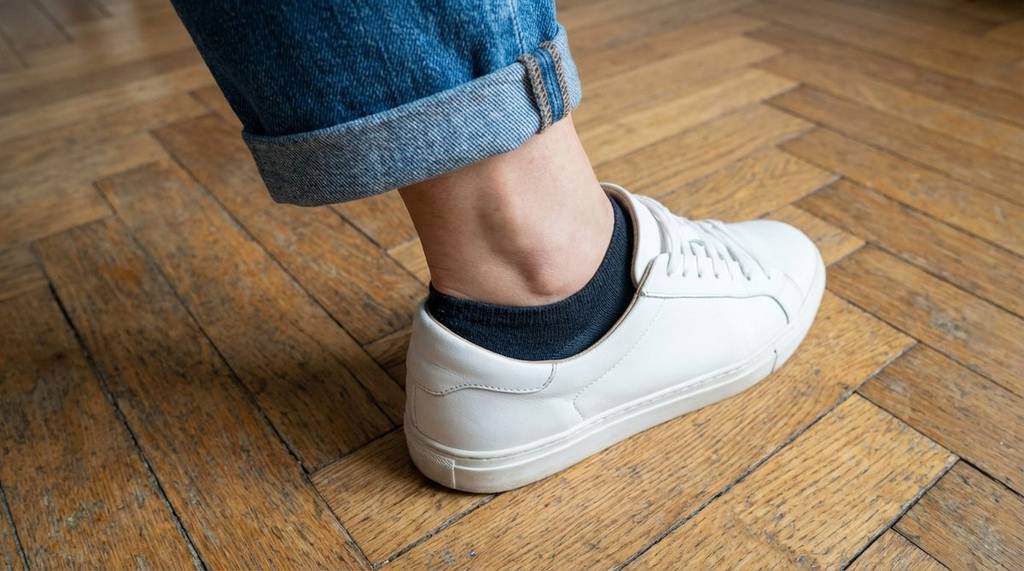
You know the drill. You’re walking. You feel it—that slow, humiliating slide. The sock fabric retreats from your heel, bunching up into a tight, uncomfortable ball at the bottom of your shoe. You stop. You yank it back up. You walk for two minutes, and there it is again. It’s exhausting.
It’s February. We are dragging our sneakers out of storage to face the lingering chill of winter. It is time to end this textile torture.
The Daily Grind of Bare Heels
There is nothing worse than ruining a nice shopping trip or a coastal walk because your sock gives up the ghost. At first, it’s subtle. Then, millimeter by millimeter, the fabric sinks. It disappears under the arch of your foot. That lump of fabric creates immediate physical discomfort. It feels like a stone in your shoe. You try to ignore it. You tense your toes. But the comfort is gone.
It isn’t just physical pain. It’s the embarrassment. Having to stop every few minutes in the middle of the sidewalk to adjust your shoe isn’t glamorous. It’s a awkward dance, balancing on one foot while strangers watch. It breaks your rhythm. It turns a pleasant day into an obstacle course.
Why Sneakers Seem to Eat Socks
The culprit isn’t always what you think. This isn’t just about you having skinny ankles or wrong shoe sizes. Even a perfectly sized sock will fail if it lacks the right properties. It’s physics.
Every step creates friction. Your foot rubs against the rigid back of the sneaker. This exerts a downward traction on the sock. If the sock doesn’t resist, the friction wins. The soft textile loses to the hard structure of the shoe. We often blame ourselves. We think we picked the wrong pair. But this is a design flaw we’ve accepted as normal. It’s a mechanical battle that standard cotton just can’t win.
Ineffective Fixes That Ruin Your Day
We’ve all tried the hacks. They don’t work.
Buying a smaller size? That’s a losing strategy. It compresses your toes. It cuts off circulation. It leaves red marks on your instep. And the sock still slips because the force of walking pulls it down anyway.
What about internet hacks? Spray hairspray on your skin? That causes dryness and allergic reactions. Stick double-sided tape to the sole of the shoe? It damages the insole and loses grip the moment your foot sweats. These are desperate measures that don’t hold up for an active woman.
The Real Solution: Silicone Heel Grips
The answer lies in a detail you can’t see. It’s silicone.
Look for socks that have a thin strip of anti-slip gel or silicone on the inside back of the heel. It sits right over the Achilles tendon area. It’s discreet. You won’t feel it once the shoe is on. But it changes everything.
Here is how it works: The silicone strip adheres to your skin. Fabric slides over dry skin. Silicone grips it. It creates a resistance that is stronger than the friction pulling the sock down. When your sneaker drags the fabric toward the floor, the silicone anchors the sock to your heel. That missing anchor point is what keeps classic socks in place.
Validation Through Daily Wear
Test this. Wear these socks for a full day of urban walking. Metro rides. Office floors. A long walk to catch the winter light.
The result is silence. You stop thinking about your feet. That mental load vanishes. From the moment you tie your laces in the morning until you take them off at night, the fabric stays put.
There is a bonus benefit. No more blisters caused by the sock bunching up or sliding away to let the shoe rub raw skin. Your foot stays protected. The walk becomes smooth.
It proves that a small technical detail can drastically improve your day. You don’t need to suffer through the slide. You just need the right anchor.
Or do you? Maybe you prefer the challenge.
Stop buying socks that fail you after Tuesday
Here is the truth about silicone grips. Not all of them are created equal. If your sock has a single tiny dot or a thin, hairline strip of silicone on the heel, toss it. It won’t stick. You will spend your day picking it up, sliding it back down, and cursing your shoes.
Look for volume. You need waves. Thick, broad bands of silicone that wrap around the back of the heel. These create actual friction. They hold firm when you walk, run, or shuffle across a slippery office floor. Thin lines offer zero resistance against repeated movement.
The fabric matters just as much as the grip
A good heel grip is useless if your feet are drowning in sweat. Synthetic materials trap heat. They make your feet itch. So, you need a specific combination.
Look for a high percentage of natural fibers. Cotton or bamboo blends breathe. They wick moisture. Pair that with the wide silicone bands mentioned above. That is the winning duo. Natural fabric keeps your skin happy. The silicone keeps the sock in place. Together, they prevent the friction burns and blisters that come from a sock that constantly shifts inside your shoe.
Clean out your drawer
Check your closet right now. Pull out your favorite ankle socks. Turn them inside out. Feel the heel.
Is it smooth?
If yes, those socks are dead weight.
They take up space. They waste money. They contribute to the “I have nothing to wear” feeling because the clothes that do fit comfortably are buried under the ones that don’t.
Start a purge. Keep the socks that stay up. Keep the socks that breathe. Replace the rest. This isn’t just about comfort. It’s about reducing clutter. It’s about owning fewer things that actually work. Your feet will thank you. The small details—the silicone wave, the cotton blend—are what turn a chore (getting dressed) into something neutral, or even pleasant.
Next time you are at the register, before you hand over your card, flip the sock inside out. Check the heel. Make sure it has substance. It’s a tiny step. But it changes everything about how your day feels.


